The moment the spreadsheet stops being harmless
The warning sign is usually small.
A client approves a proposal on Tuesday. On Wednesday, someone creates the project board by copying the client name, scope, dates, and value into another tool. On Friday, finance asks whether the first milestone can be invoiced yet. Nobody is sure, because the project manager is looking at task status, finance is looking at an invoice draft, and the signed proposal is buried in a folder.
This admin rarely appears in the budget. It looks like people doing their best to keep work moving.
Belvak exists for that exact stage of a service company: too busy for memory and spreadsheets, too practical for a heavyweight ERP rollout. It is built for teams that sell client work, deliver it with people, bill for it, and then try to keep the relationship healthy after the first project ends.
Start with the handoff
The first thing Belvak fixes is the handoff between selling work and delivering work.
In many service companies, the proposal is treated as a sales artifact. It helps win the deal, then it goes quiet. Delivery starts somewhere else. Billing starts somewhere else again. Every move creates a chance for a wrong amount, a missed scope detail, a stale client address, or a forgotten milestone.
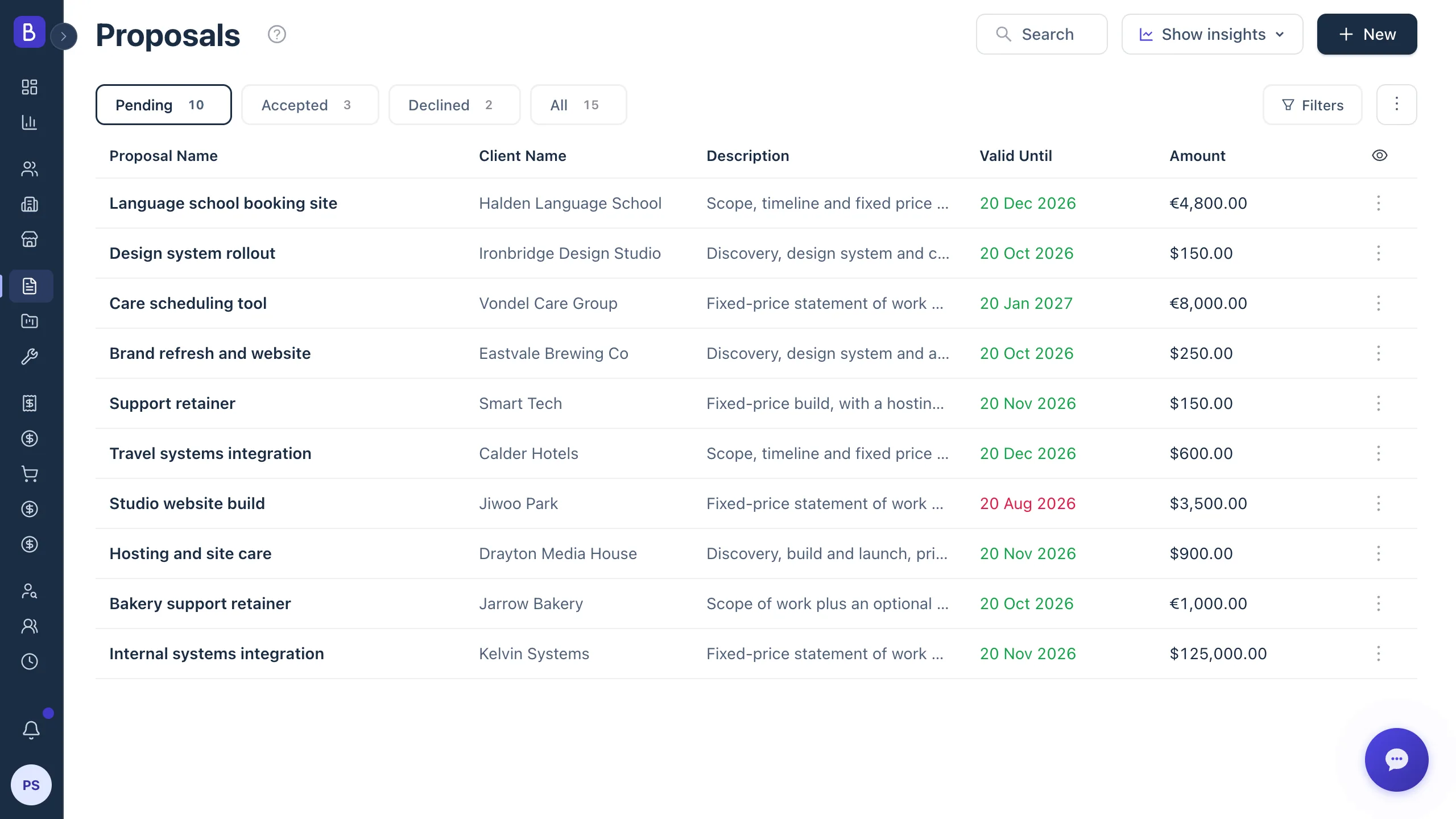
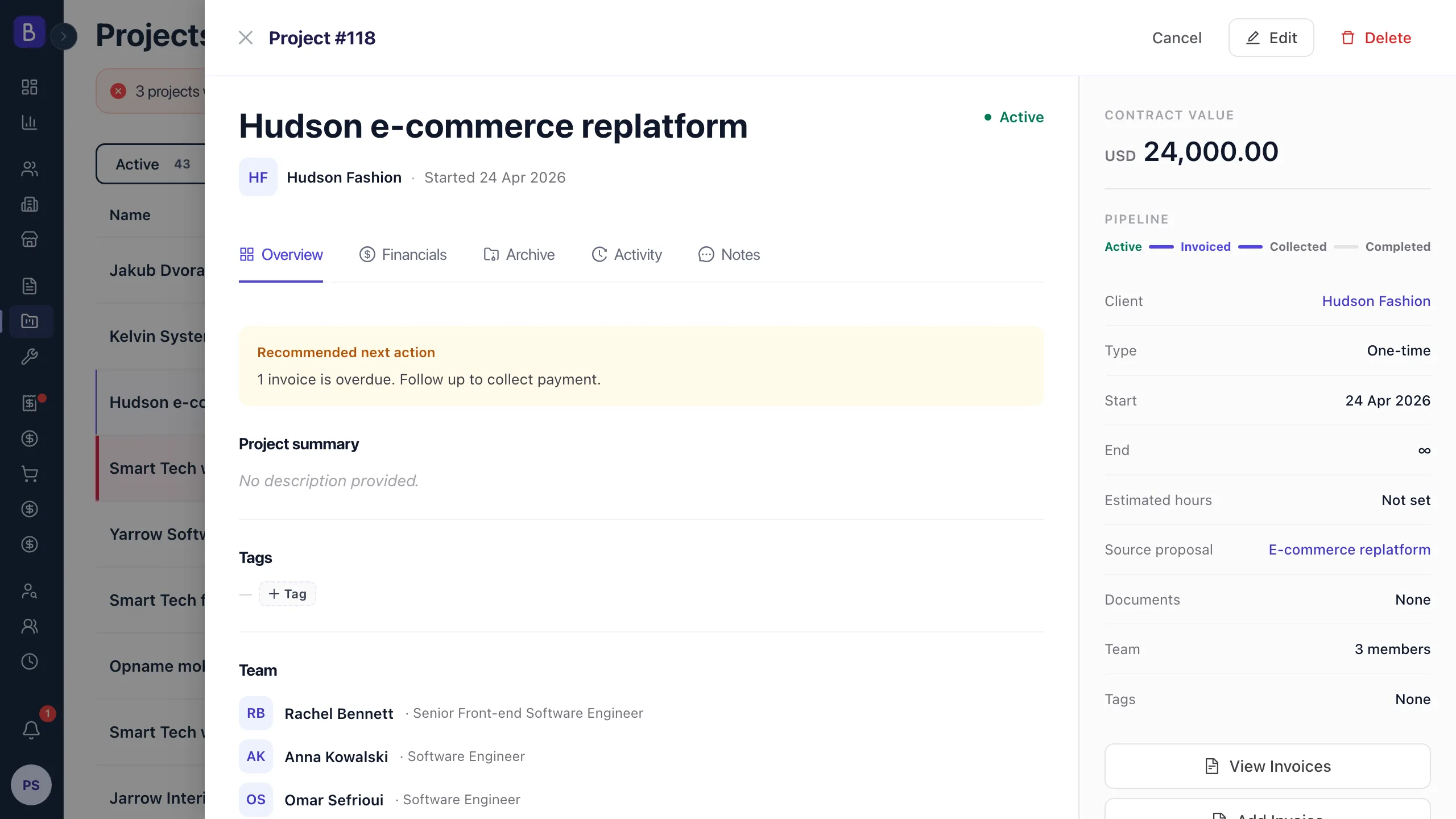
In Belvak, the proposal is part of the operating record. It carries the client, scope, value, and timeline. Once the work is accepted, an approved proposal can be converted into a project instead of retyped. The project then shows the contract value, team assignment, status, and collection progress. When invoices and payments are added, they stay tied to the work they came from.
That sounds basic until you have had to answer one of these questions under pressure:
- Did we invoice the second milestone?
- Are we billing the amount from the accepted proposal or the old draft?
- Which project does this payment belong to?
- Are we doing work that was never priced?
Belvak is designed so those answers are visible from the work itself. The proposal-to-invoice pipeline is the spine of the product because revenue leaks usually happen between tools, not inside one tidy screen.
Put the client story in one place
Client management gets awkward when every department owns a different version of the client.
Sales knows what was promised. Delivery knows what is late. Finance knows who pays slowly. The founder remembers that the client dislikes long reports. The new account manager knows none of this unless someone does a careful handover.
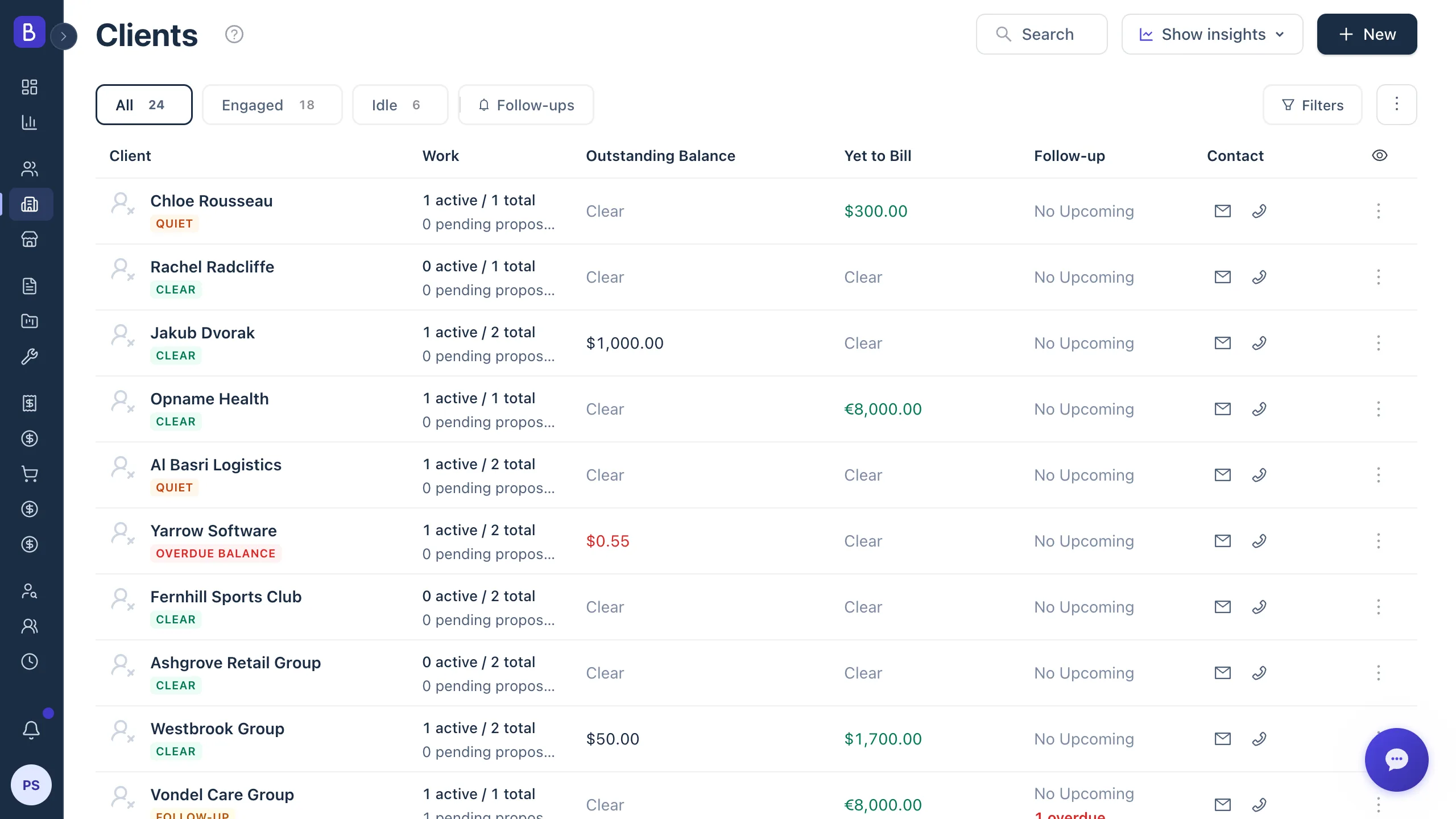
Belvak makes the client record more useful than a contact card. It brings together proposals, projects, invoices, payments, notes, activity, and recurring agreements around the same client. The goal is not to document everything for its own sake. The goal is to stop losing context when a person is unavailable, a project changes hands, or a client comes back months later.
This matters most for repeat work. A second proposal should benefit from the first project. A renewal call should include payment history and service coverage. A client issue should be handled by someone who can see the account history, not only the latest email.
Treat recurring work like real work
Maintenance contracts are where a lot of service teams quietly outgrow their old habits.
The first few support plans are easy to remember. One client renews in June. Another has quarterly coverage. A third pays monthly but pauses every summer. Then the list grows, and suddenly someone is maintaining a spreadsheet with colors, reminders, comments, and nervous energy.
Belvak gives maintenance contracts their own place because recurring service has its own rhythm. Teams need to know:
- Which contracts are active.
- What period each payment covers.
- Which renewals or check-ins are coming up.
- Which client needs attention before the service window passes.
Recurring service behaves differently from ordinary project tracking. A project usually moves toward completion. A maintenance contract comes back again and again. If the system does not surface the next action, the team relies on calendar reminders and personal memory. That works until the person who remembers is busy, traveling, or gone.
Keep hiring close to delivery
Service companies sell more than deliverables. They sell the ability to put the right people on the right work at the right time.
Recruitment belongs near project operations. If the project pipeline needs technical skills next month, the hiring pipeline should know before the contract is signed. If a candidate has useful skills but is not right for today's role, the team should be able to find them when the right engagement appears.
Belvak includes recruitment for this reason. Candidate records, skills, hiring stages, CVs, and notes live near the employee and project picture. When someone is hired, their information can become part of the team record without another round of data entry.
For a growing agency or consultancy, this changes the hiring conversation. Instead of "who do we need right now?", the better question becomes "what work are we likely to win, and what skills are we short on?"
Stop turning simple questions into reports
A healthy service business asks basic questions all the time:
- How much unpaid invoice value is open?
- Which active projects are not fully invoiced?
- Which maintenance contracts need attention this week?
- Which clients have the most work in progress?
- Who is assigned where?
When the data lives in separate tools, these questions become mini reporting projects. Someone exports, checks, cleans, asks around, and turns a simple answer into a half-day task.
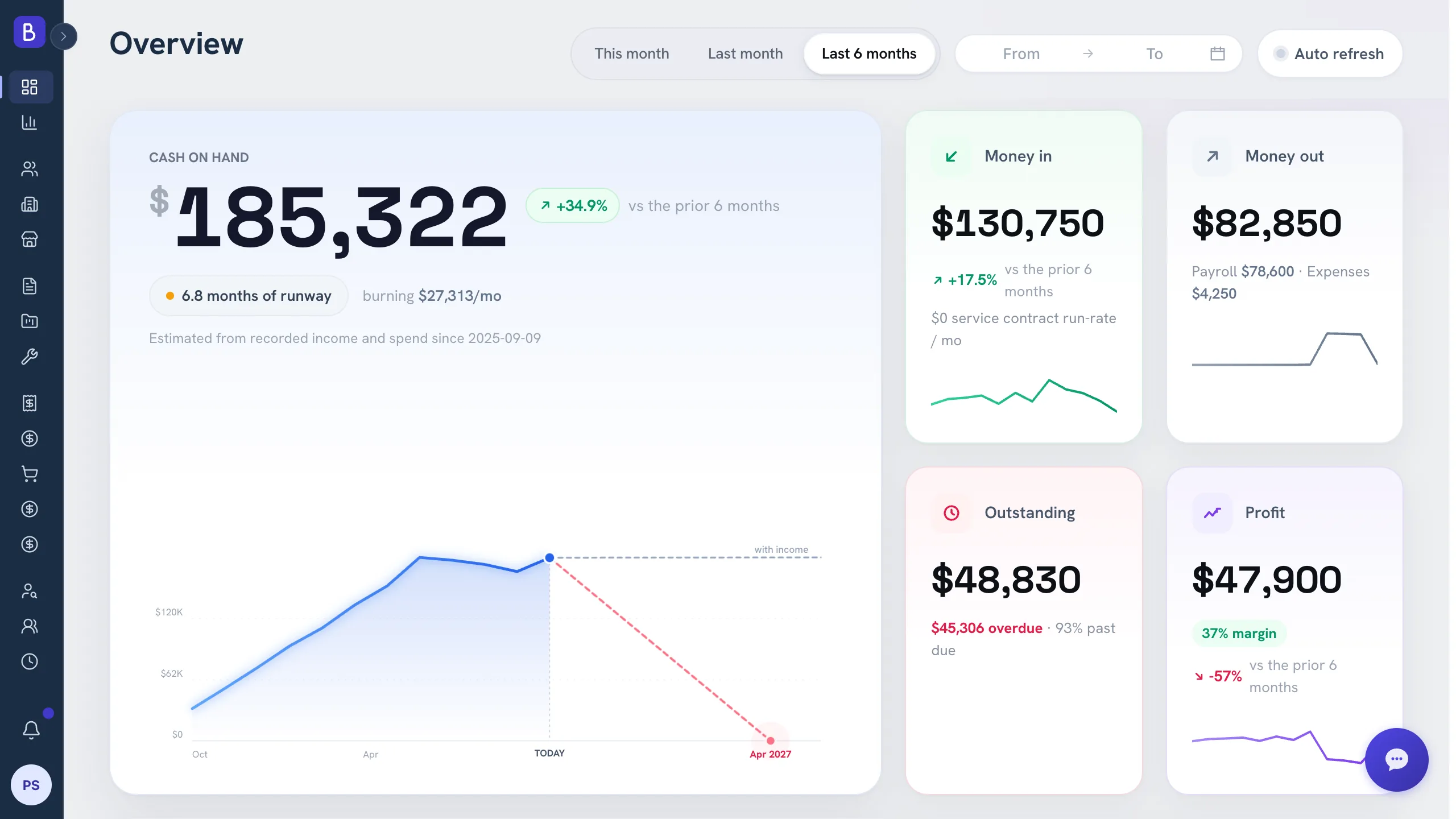
Belvak's dashboard and AI assistant sit on top of the same operational data. The dashboard gives managers a regular view of project health, revenue, collection, and activity. The AI assistant is there for plain-language questions when someone needs a quick answer without building a report from scratch.
AI is useful here only because the surrounding records are already organized. If the source information is scattered, an assistant just becomes another place to ask vague questions. Belvak's advantage is that the questions point back to client work, invoices, payments, contracts, and team data that already belong together.
Why this is not an ERP pitch
Belvak is deliberately narrower than a traditional ERP.
A five- to fifty-person service company usually does not need manufacturing modules, inventory logic, or a long implementation project before the team can send invoices. It needs clean handoffs across the work it already does every day: proposals, client projects, billing, payments, recurring service, employees, hiring, and reporting.
That focus is the product.
Belvak gives service teams enough structure to trust the business without forcing them into software built for a different kind of company. It replaces the patchwork that grows around a busy team: proposal folders, project boards, invoice apps, contract spreadsheets, hiring trackers, and manual reports.
The test
Here is the easiest way to know whether Belvak solves a real problem for your team.
The next time someone asks, "What did we agree, what have we delivered, what have we invoiced, and who is responsible now?", count how many places you need to check.
If the answer is one place, you are in good shape.
If the answer is three tabs, a spreadsheet, a chat thread, and the one person who always remembers the backstory, Belvak was built for you.