Getting Paid on Time Is Mostly a Process Problem
Clients pay faster when the invoice is expected, easy to understand, sent to the right person, and followed up on a predictable schedule. The awkwardness most owners feel about chasing money usually comes from a vague process, not a difficult client.
Use this if invoices are going out late, payments depend on personal reminders, or your team avoids follow-up because it feels uncomfortable.
This guide walks through why clients pay late and the practical steps that get them to pay on time: invoice the moment work is delivered, use terms that actually work, follow up without burning the relationship, and track receivables so nothing slips.
Why Clients Pay Late
Most late payments are not bad faith. They come from a handful of predictable causes:
- The invoice arrived long after the value was delivered, so it feels like old news.
- The payment terms were never stated clearly before the work started.
- The invoice went to the wrong person and never reached accounts payable.
- The description was vague, so the client paused to check what they were paying for.
- There was no follow-up, so the invoice simply drifted to the bottom of a to-do list.
Every one of these is inside your control. Fix them in order and the average time to payment usually drops without a single difficult conversation.
Send Invoices the Moment Work Is Delivered
The single highest-impact change is timing. Send the invoice the same day a milestone is approved, while the client is still feeling the value. Every day between finishing the work and sending the bill is a day you are lending money to your client for free.
Before you send, check the invoice itself:
- Does the description match a specific milestone or deliverable?
- Is the billing contact correct?
- Are the payment methods obvious?
- Are the payment terms and due date written clearly?
If the invoice is vague, the reminder will feel vague too. A connected invoicing process helps because project, client, and payment details are not retyped every time. If you are still billing from a document editor, a free invoice generator is a quick way to send a clean, professional invoice that looks like a real business sent it.
Use Payment Terms That Actually Work
Net 30 is common, but it is not required for every service business. For smaller projects, Net 7 or Net 14 can be reasonable when the terms are stated before the proposal is accepted. For milestone work, the payment date should follow milestone approval, not the end of the month.
Example assumption: if payroll leaves your account every two weeks, a Net 30 term can force you to finance the client for one or two payroll cycles. Shorter terms reduce that gap.
For ongoing work, a recurring invoice on a fixed schedule removes the question of when to bill entirely. The client knows the amount and the date, and the invoice arrives on the same day every period.
Follow Up on Overdue Invoices Without Burning the Relationship
Most owners wait until an invoice is badly overdue, then send a tense email. A predictable cadence that starts before the due date works better and feels calmer for everyone:
- Send the invoice the same day the milestone is approved.
- Send a friendly reminder three business days before the due date.
- Send a direct reminder on the due date.
- Send a firmer note three business days after the due date.
- Escalate to the project owner after seven business days overdue.
Do not improvise the tone each time. Save templates in your billing process or use the guidance in invoicing and payments help.
Reminder Copy You Can Use
Quick reminder that invoice [number] for [deliverable] is due on [date]. You can pay using [method]. If this should go to someone else on your finance team, send me their details and I will update the billing contact.
After the due date:
Invoice [number] is now past due. Could you confirm whether it is scheduled for payment, or if anything is blocking approval on your side?
Neither message accuses the client of anything. Each one makes it easy to say yes or to name the blocker.
Use Milestone Billing to Reduce Risk
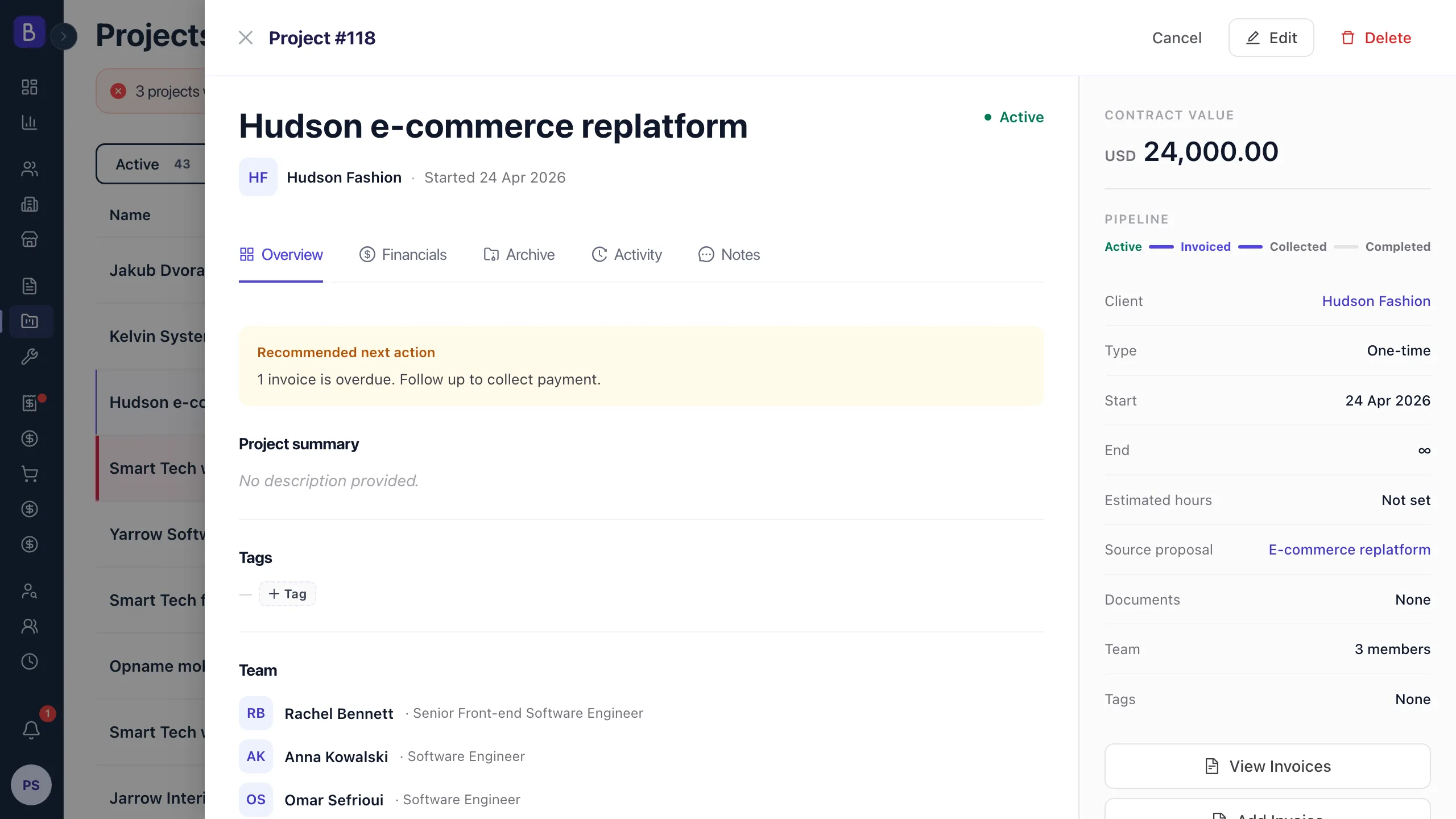
Large final invoices are harder to collect because the client already has the work. Break projects into deposits, milestone payments, and a final acceptance payment. Tie each invoice to a clear deliverable so the client can see what they are paying for.
A common structure for a larger project is a deposit at kickoff, staged payments at agreed milestones, and a final payment on acceptance. The deposit covers your early costs and signals commitment. If a client refuses milestone payments entirely, that itself tells you how the payment relationship is likely to go.
Track Receivables So Nothing Slips
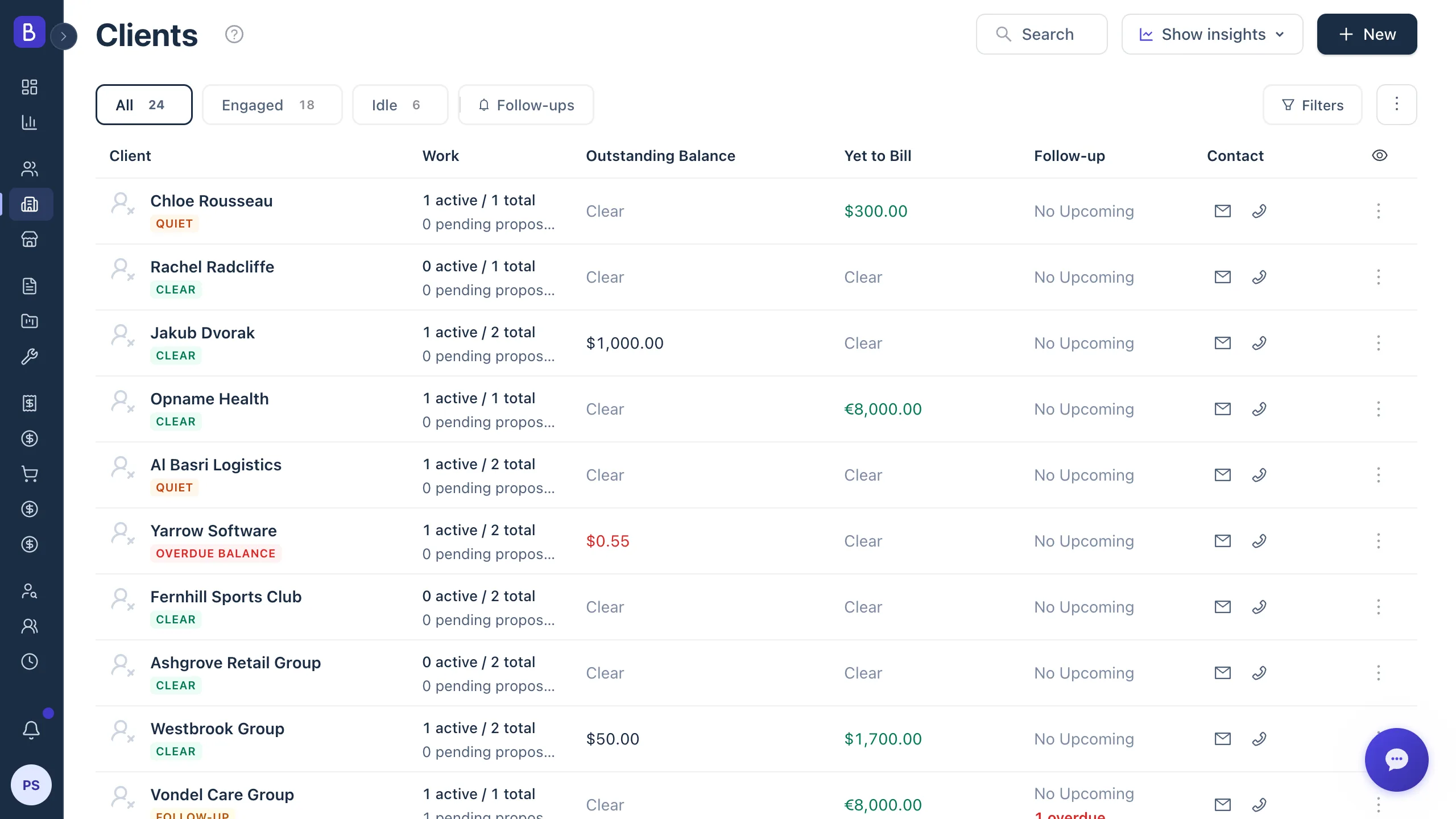
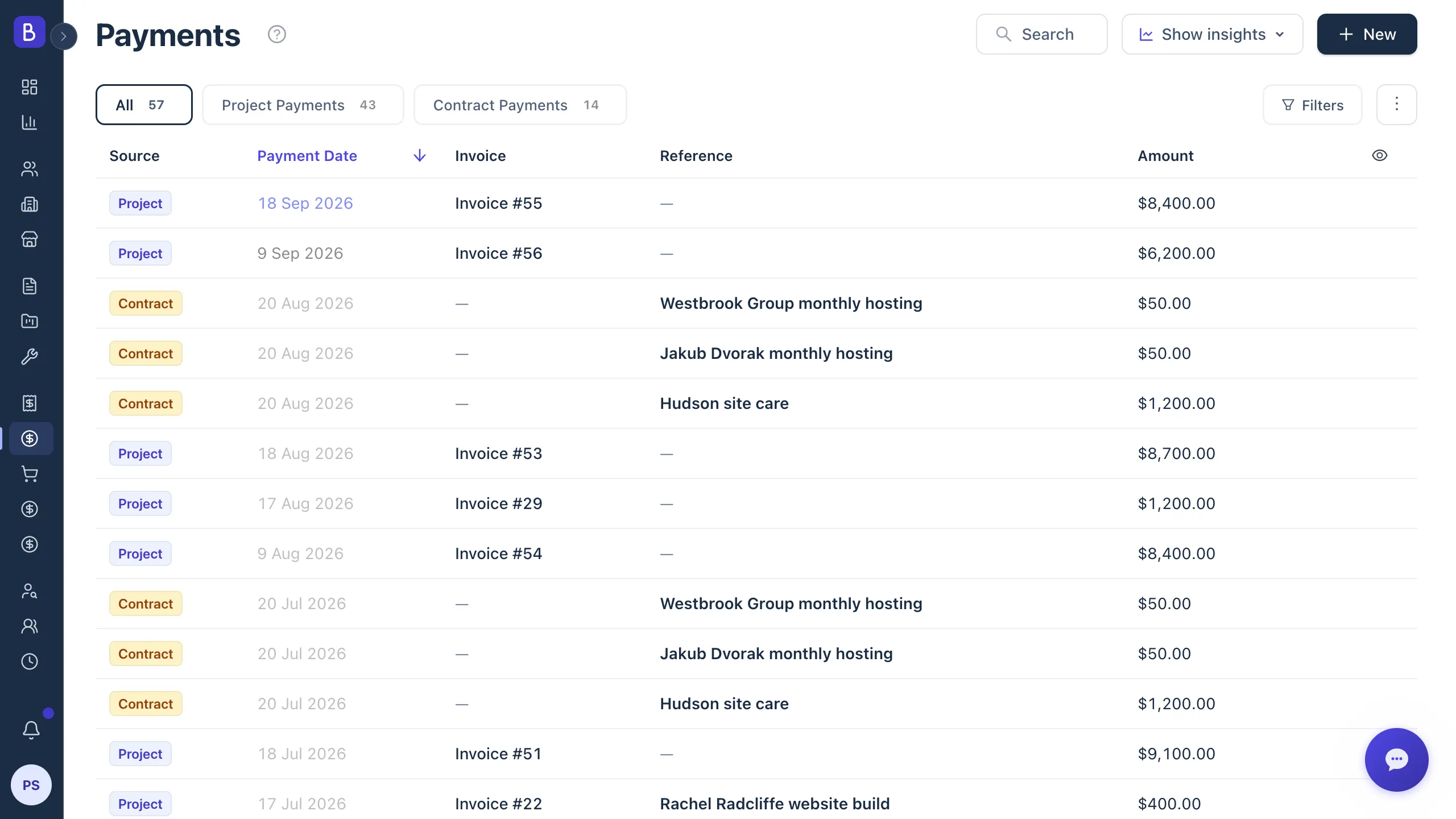
Getting paid on time is not only about individual invoices. It is about seeing the whole picture so a slow-paying client does not quietly become a cash flow problem.
Two simple measures do most of the work:
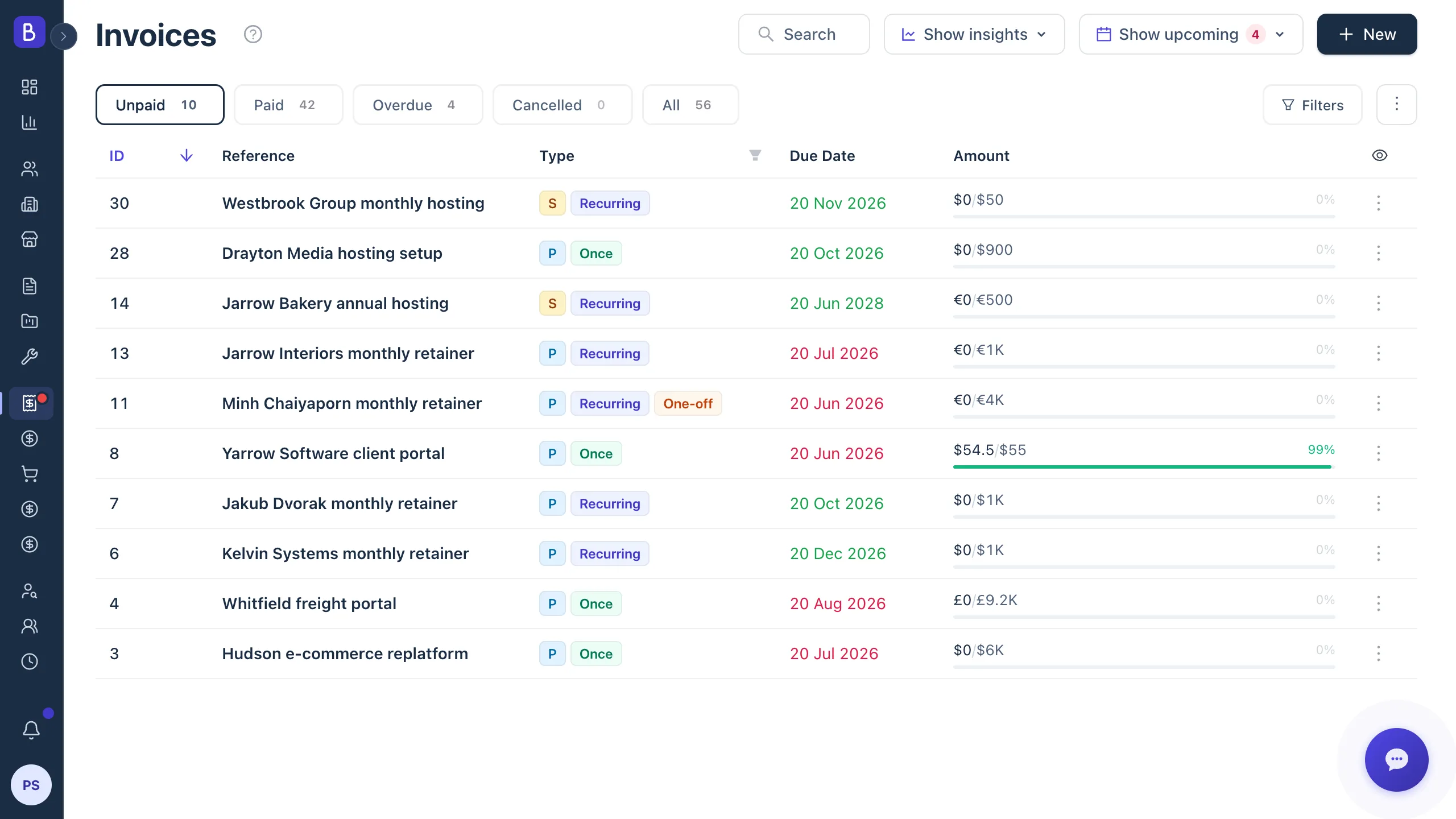
- Accounts receivable aging groups every unpaid invoice by how overdue it is, so the money that needs attention this week is obvious.
- Days sales outstanding tracks the average time it takes to collect, so you can tell whether your process is improving or drifting.
Review both on a fixed day each week. When you can see which invoices are current, overdue, or seriously overdue in one place, follow-up becomes a routine instead of a scramble, and no invoice sits forgotten for months.
Frequently Asked Questions
How can I get a client to pay an overdue invoice without damaging the relationship? Follow a predictable cadence: a friendly reminder before the due date, a direct note on the due date, and a firmer message a few days after. Keep each message factual and offer an easy way to name any blocker. Most overdue invoices are an oversight, not a refusal.
What payment terms should a small service business use? Net 14 works well for most small projects, and milestone or upfront payments work well for larger ones. Choose terms based on your own payroll timing and state them clearly before the proposal is accepted, not after the work is done.
When should I send an invoice? Send it the same day the milestone is approved, while the value is fresh. Delaying the invoice to a monthly billing date is one of the most common reasons payments come in late.
How do I know if my collection process is working? Watch your accounts receivable aging and days sales outstanding over time. If the share of overdue invoices is shrinking and the average days to collect is falling, your process is working. If either is climbing, tighten your terms and follow-up cadence.
When billing is clear from proposal to project to invoice, and you can see your receivables at a glance, getting paid on time becomes a normal operating rhythm rather than a personal confrontation.