Raise rates when the math and the market both say so
Raise your rates when your delivery cost, demand, or the value you provide has moved and your pricing has not kept up, not simply because you feel busy. The strongest increases are tied to a clear reason you can state out loud, given with enough notice, and framed around your value rather than an apology. Below are the six signs you are overdue, and a script for telling existing clients.
Use this if your team is booked, margins are shrinking, or new clients accept your quotes without a second thought.
6 signs you are undercharging
Any one of these is worth a look. Two or more, and you are almost certainly leaving money on the table.
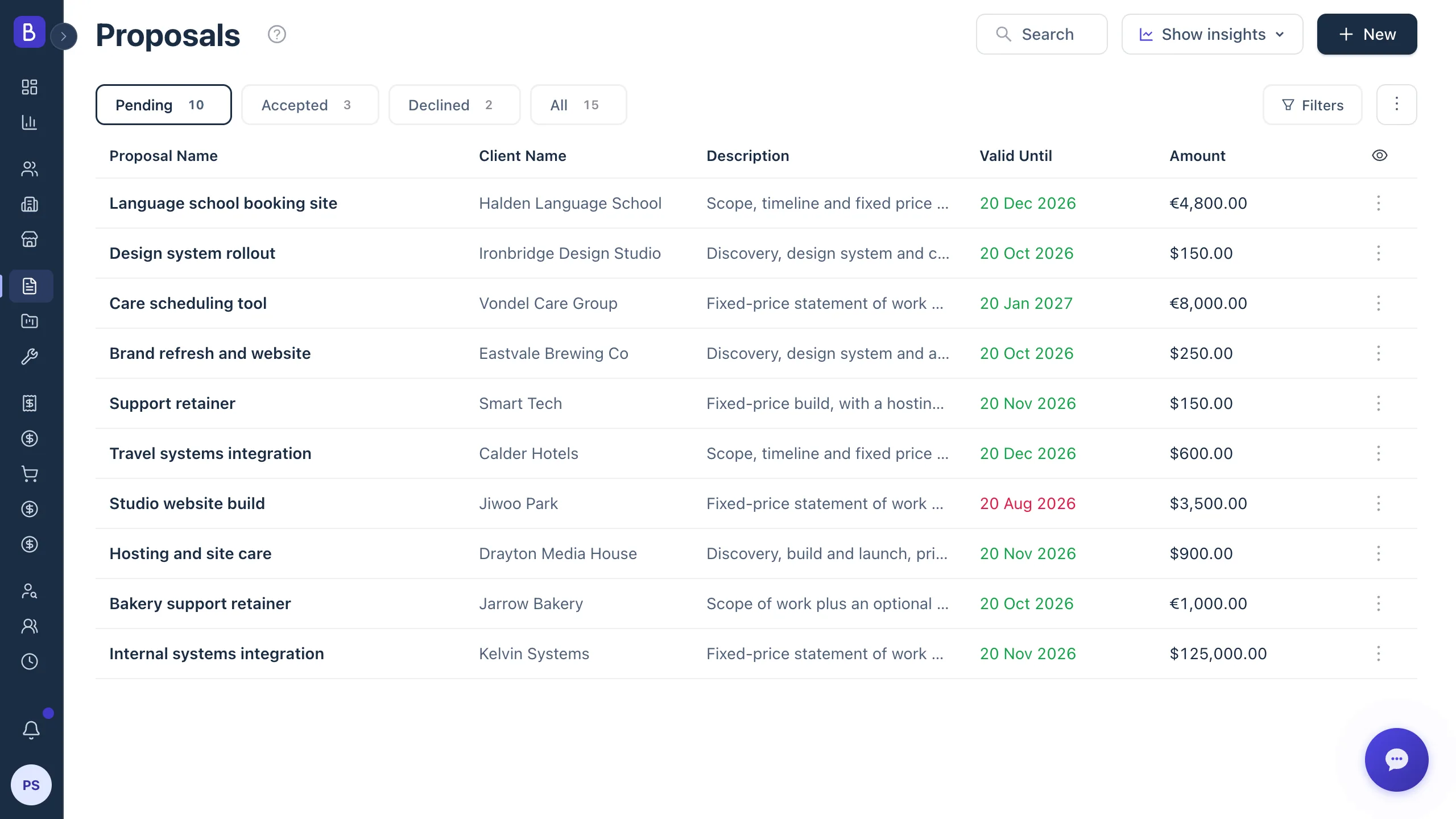
- You win almost every proposal. A healthy win rate leaves some deals lost to price. If nearly everyone says yes without hesitation, your price is not competitive; it is cheap. What a realistic win rate looks like, and how to lift it, is covered in winning more proposals.
- Senior people are doing work priced for junior delivery. When your most expensive people are on tasks you scoped at a lower rate, the engagement quietly loses margin every hour.
- Scope has grown more complex but your pricing has stayed flat. If the work is harder and the rate is the same, you are effectively being paid less for more.
- Your margin per project is falling. Rising delivery costs with static prices is the clearest financial signal of all.
- You need very high utilization just to break even. If every billable hour has to be sold to cover fixed costs, there is no slack for sick days, admin, or a slow month. Chasing utilization rate upward to stay solvent is a pricing problem wearing a capacity costume.
- New clients need more coordination than your old pricing assumed. If today's clients demand more meetings and management than the rate was built for, the rate is out of date.
Check your margin before you decide
Feeling underpaid is a prompt, not proof. Before you change anything, look at the number. Compare each project's revenue against its delivery cost: labor (hours multiplied by a loaded hourly cost) plus contractors and any direct expenses. If a twenty-thousand-dollar project consumes fifteen thousand in delivery cost, the gross margin is twenty-five percent; if your target is forty, the price or the scope has to move.
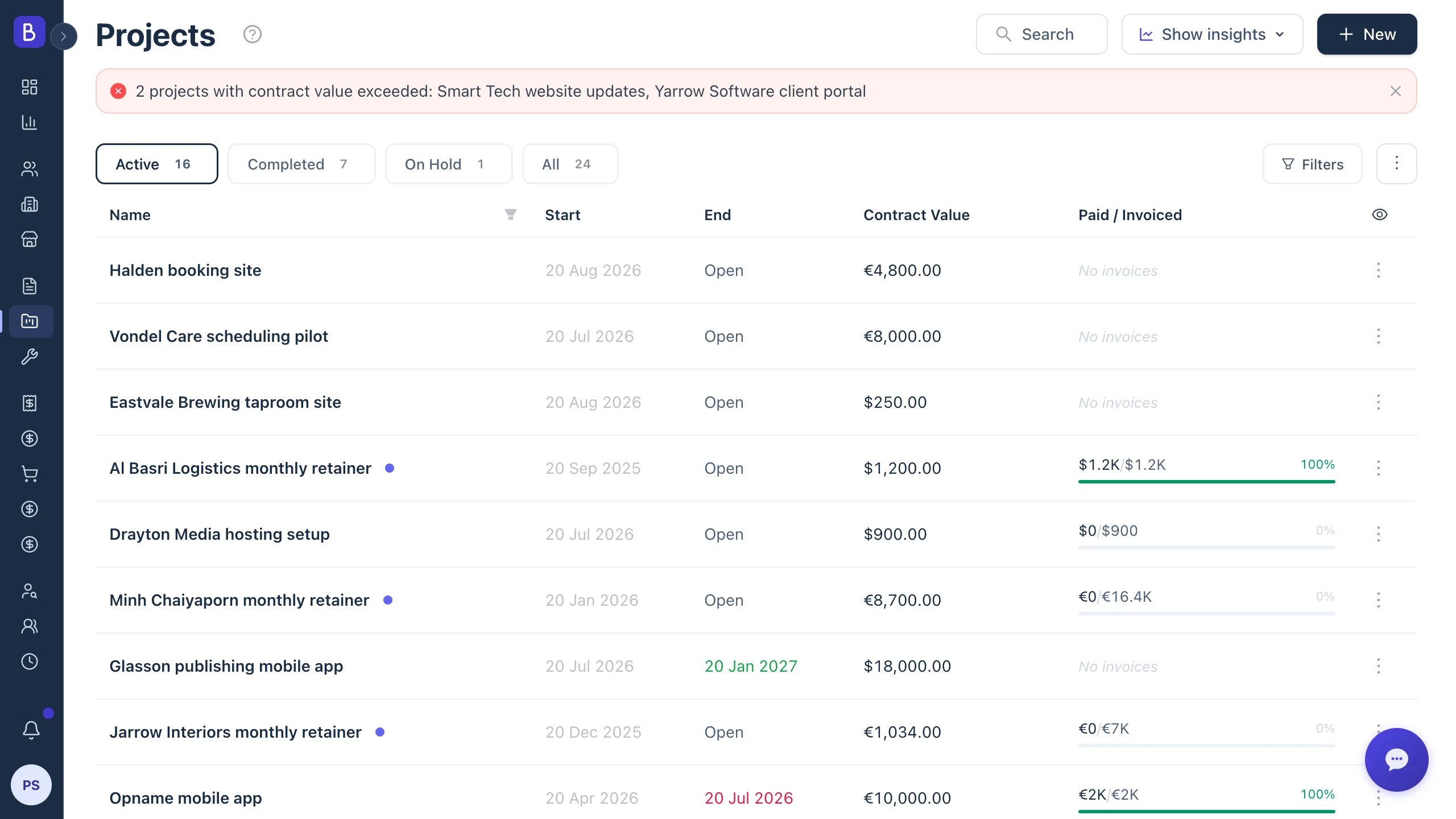
The cleanest way to see this is per billable hours, because a healthy-looking day rate can still hide a thin effective rate once you count the unbilled coordination around it. Seeing margin project by project, while the work is happening rather than at year end, tells you exactly which engagements are underpriced. Our guide to tracking project profitability walks through the full calculation.
The market side matters just as much as the math. Check what comparable providers charge by talking to peers, reading published rate guides, and noting where your quotes land against competing bids, so your new number reflects the going rate and not just a hunch that you deserve more.
Segment your clients before you announce anything
Do not send one blanket message to every client. Sort them first, because each group needs a different move:
- New prospects get the new rate immediately. They have no memory of the old one; to them it is simply your price.
- Healthy existing clients get the increase at renewal or the next scope expansion, which is the natural moment to reset terms.
- Strategic clients who send referrals or open doors may warrant a smaller or phased increase, as long as you are honest that it is a deliberate choice, not fear of losing them.
- Low-margin, high-maintenance clients get a firm increase or a redesigned relationship. If they leave, they were subsidized by your better accounts anyway.
This keeps you from protecting the accounts that are quietly hurting the business.
How to tell clients about a price increase
For existing clients, give real notice and lead with value, not an apology. Adapt this neutral script:
Starting [date, ideally 30 to 60 days out], our rate for [service] will move from [old rate] to [new rate]. This reflects the level of planning, delivery, and senior review the work now requires. Your current agreement stays unchanged through [date]. Before then, we can renew at the new rate or adjust the scope to fit a different budget.
A few things make this work. The notice period lets a client plan their budget instead of feeling ambushed. Stating the reason, more senior involvement or more complex work, gives them something to accept rather than resent. Offering a scope option keeps the door open for clients who genuinely cannot stretch. And there is no "sorry" in it, because you are not doing anything wrong; you are pricing your work correctly. Expect a few to negotiate, most to accept, and the occasional one to leave. Losing one price-sensitive account to a well-run increase is usually a good trade.
When not to raise your rates
A rate increase is not always the right move. Hold off when:
- Your quality is inconsistent. Higher prices raise expectations. Fix reliability and delivery first, then charge for it.
- Your market is genuinely contracting. In a downturn where clients are cutting budgets across the board, a poorly-timed increase can price you out.
- Your pipeline is thin. Raising rates from a position of desperation puts you in a weak spot. Stabilize demand first.
- You cannot name what changed. If a client asks "why?" you need a real answer: deeper expertise, a proven track record, rising costs, market alignment. "Because I want more" is not one yet.
And never use a rate increase to paper over internal waste. If projects are unprofitable because estimating, handoffs, or review cycles are broken, a higher price hides the problem for a quarter and then the same leak returns. Know your margin, know your value, give clear notice, and always leave the client a path forward.