Industry

Scaling From Freelancer to Agency: What Nobody Tells You

Maya DarwishMarch 26, 20268 min read
Scaling From Freelancer to Agency: What Nobody Tells You

I Was Making More Money Working Alone. I Started an Agency Anyway.

In 2021, I was a freelance UX designer earning about $110K a year. I had six regular clients, a waitlist, and a schedule I mostly controlled. I worked from coffee shops, took Fridays off when I felt like it, and answered to nobody.

By 2023, I had four employees, $380K in annual revenue, and I was taking home less money than when I was solo. I was working more hours, not fewer. I had rent, payroll, software subscriptions, and an accountant. My Fridays off were gone. My coffee shop days were gone. I was in a WeWork answering Slack messages at 10 PM.

I'm going to tell you the truth about scaling from freelancer to agency, because most of the articles I read before making the leap were written by people trying to sell me a course. They made it sound like a natural progression, like you just keep adding people and the money grows proportionally. That is not what happened.

The First Hire Is the Hardest Decision You'll Make

Let me set the scene. It was early 2022. I had more work than I could handle. I was turning down projects, which felt terrible. Two clients had hinted that they'd give me larger contracts if I could take on more work. The math seemed simple: hire someone, take on more projects, make more money.

The math was wrong. Or rather, the math was right but incomplete.

I hired Jenna, a mid-level designer, in March 2022. Her salary was $55K. On paper, she'd generate enough billable hours to cover her cost and then some. Here's what I didn't account for.

Training took longer than expected. Even though Jenna was experienced, she didn't know my clients, my processes, or my style. For the first two months, I spent roughly 10 hours a week reviewing her work, giving feedback, and redoing things that didn't meet client expectations. That was 10 hours I wasn't billing. At my rate of $120 per hour, I was losing $1,200 a week in opportunity cost while also paying her salary.

Clients wanted me, not "my team." This hit me hard. Two of my six clients explicitly said they'd hired me, not a designer who works for me. One of them left when I tried to transition them to Jenna. That was $18K in annual revenue, gone. Not because Jenna was bad, but because the client had a personal relationship with me and didn't want to restart that with someone new.

I wasn't prepared for the emotional weight. Being responsible for someone else's livelihood is fundamentally different from being responsible for your own. When a slow month hit, I didn't just worry about my mortgage. I worried about Jenna's mortgage. That stress doesn't show up in any business plan.

The Pricing Problem Nobody Warns You About

As a freelancer, I charged $120 per hour. Good rate. Clients were happy. I was happy. Simple.

When I started the agency, I initially kept the same rate. Huge mistake. Here's why.

When I was solo, $120 per hour covered my time, my expenses, my profit, and my taxes. When I had employees, $120 per hour had to cover the employee's salary, benefits, overhead (office, tools, insurance), my management time, and still leave profit.

I did the math one evening and realized that at $120 per hour with an employee doing the billable work, my actual margin was about 12%. After taxes and overhead, I was making almost nothing on employee-billed hours. I was essentially running a staffing agency at staffing agency margins without the staffing agency volume to make it work.

I had to raise prices. But raising prices when you're a solo freelancer is hard, and raising prices when you're a brand-new agency with no track record is even harder. Clients said things like, "Why am I paying more when someone less experienced is doing the work?" Fair question. Hard to answer.

What eventually worked was repositioning. I stopped selling hours. I started selling outcomes. Instead of "80 hours of UX design at $150 per hour," I proposed "complete UX redesign of your checkout flow, including research, wireframes, testing, and final designs, for $18K." Same amount of work, roughly. But the client is buying a result, not counting hours. And $18K sounds reasonable for a checkout redesign when the alternative is their current 2.3% conversion rate.

This took about six months to fully transition, and during that time, my income was genuinely lower than it had been as a freelancer. If someone had told me that in advance, I don't know if I'd have done it. I'm glad nobody told me.

Delegation Anxiety Is Real, and It Doesn't Just Go Away

The hardest skill I've had to develop isn't design, sales, or financial management. It's letting go.

When you've built a career on the quality of your personal work, handing that work to someone else feels dangerous. Every deliverable that goes to a client with your company's name on it but wasn't touched by you feels like a risk. What if it's not good enough? What if the client notices? What if your reputation takes a hit?

I'll be honest, I got this wrong at first. I reviewed every single piece of work Jenna produced. Every wireframe, every user flow, every presentation deck. I rewrote copy. I moved pixels. I gave so much feedback that she stopped making her own decisions because she knew I'd change everything anyway.

About four months in, Jenna told me she was frustrated. She felt micromanaged. She said she'd been hired for her skills but wasn't allowed to use them. She was right. I was the bottleneck, and I was creating it because I was afraid.

Here's what I eventually figured out. Delegation isn't about trusting that someone will do things exactly like you. It's about defining the outcome you need and letting them find their own path to it. Jenna's approach to user research was different from mine. Not worse. Different. Some of her methods were actually better. But I couldn't see that while I was standing over her shoulder.

The rule I set for myself: review final deliverables before they go to clients, but don't review intermediate work unless asked. If the final deliverable meets the standard, the process is their business. This one change fixed most of the delegation problems.

The Processes You Need vs. the Ones You Don't

As a freelancer, I had almost no processes. Client calls me, I do the work, I send an invoice. Everything lived in my head.

When I started hiring, my instinct was to document everything. Every step. I wrote process documents for how to name files, how to structure a Figma project, how to write client emails, how to estimate projects. I created templates for everything. I set up a Notion workspace with seventeen databases.

This was overkill. Most of those processes were solutions to problems we didn't have yet, and some of them created new problems (people spent more time following the process than doing the work).

Here's what I actually needed at the four-person stage:

A project intake process. How do we decide whether to take on a project? Who scopes it? Who estimates it? Who writes the proposal? This matters because without it, you'll say yes to everything, including projects that lose money.

A client communication standard. Not a script. Just a shared understanding of how we communicate. Response time expectations. Who owns the client relationship. When to loop me in versus handle it themselves. The goal isn't uniformity. It's ensuring the client has a consistent experience regardless of who they're talking to.

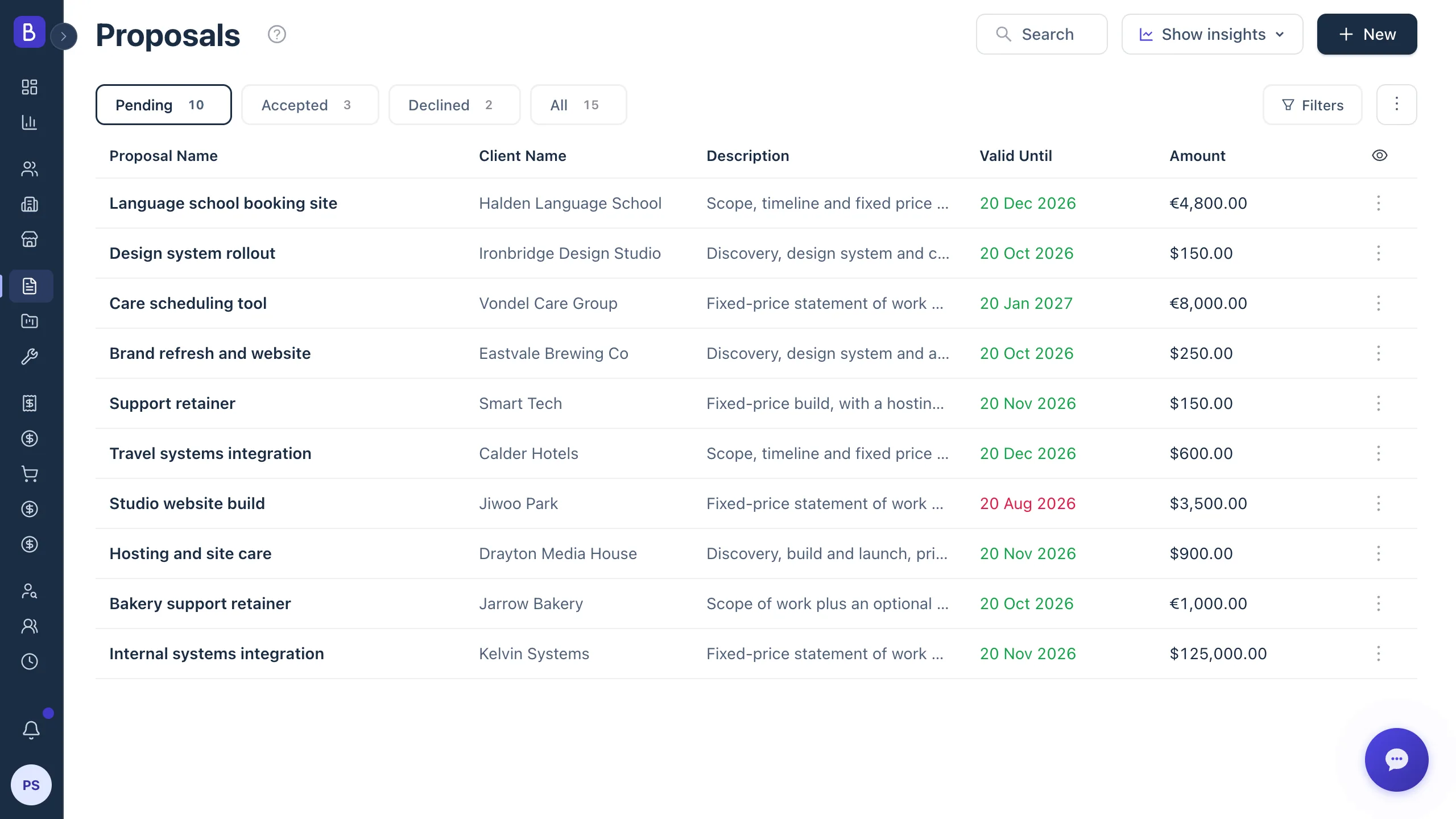
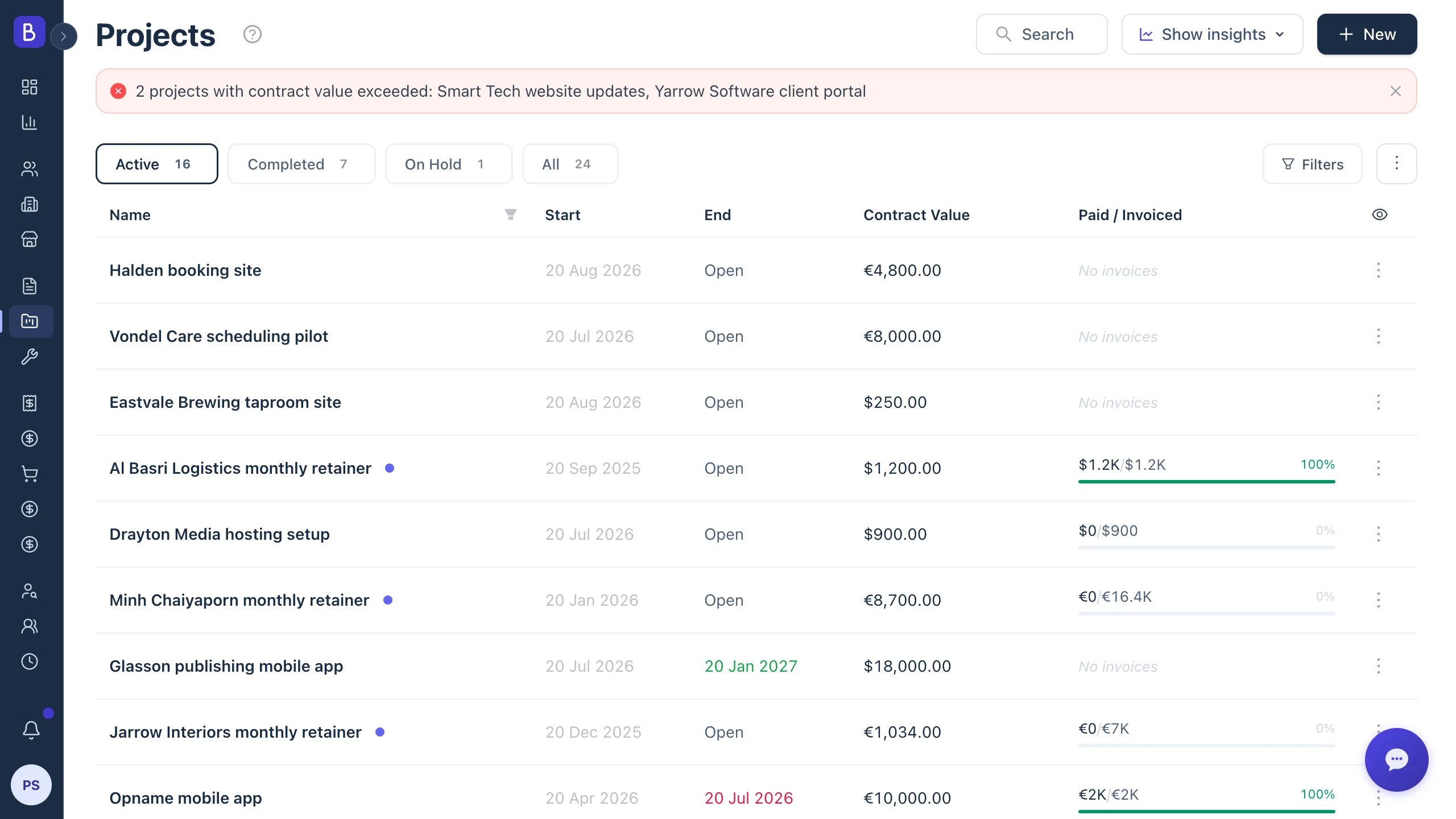
A simple project tracking method. Where is each project? What's the status? What's the deadline? Is it on track? This doesn't need to be complex. For the first year, we used a shared spreadsheet and it worked fine. Later, we moved to proper project management software, but by that point, we actually needed it.

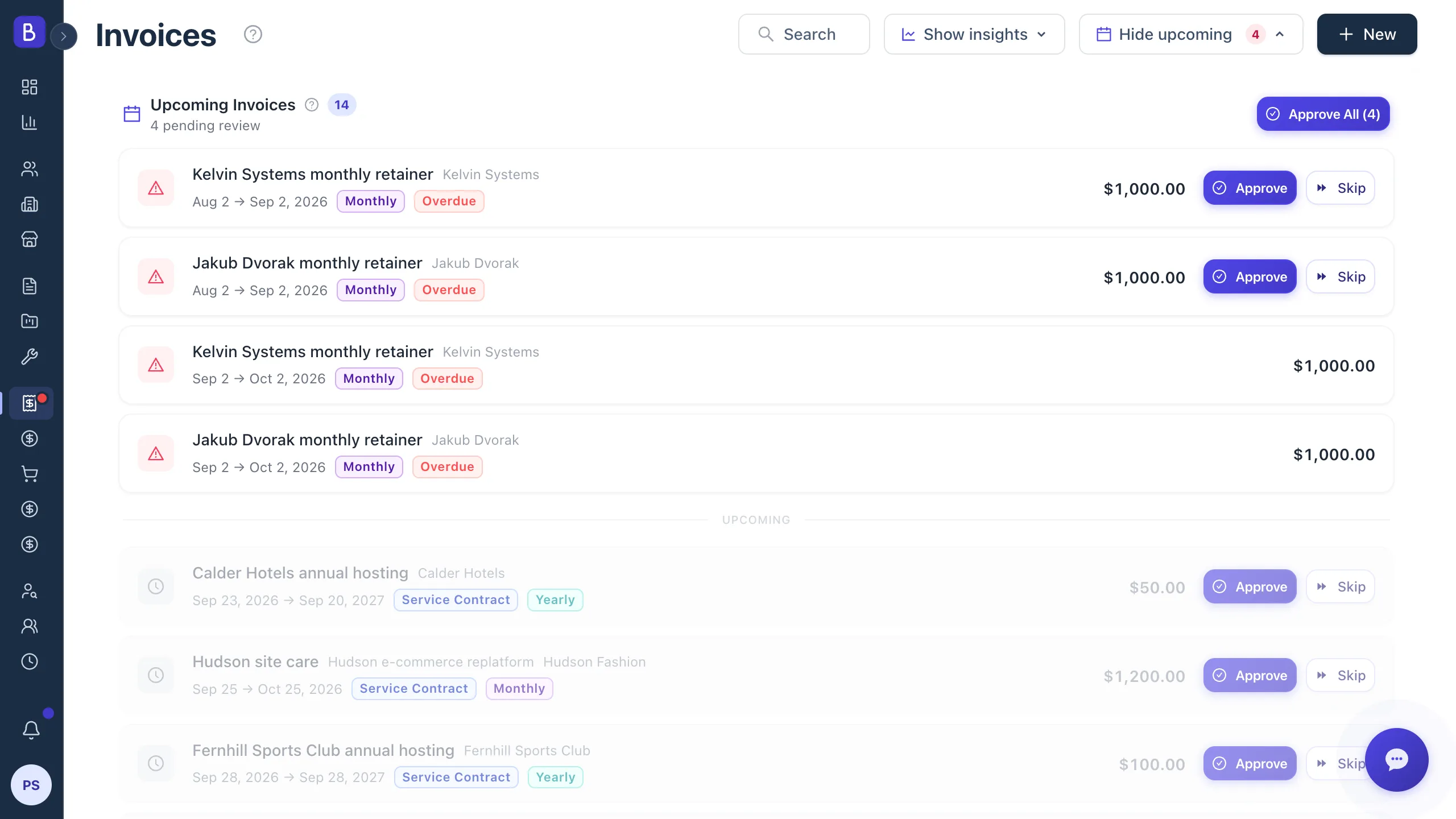
An invoicing and payment follow-up process. When do invoices go out? Who follows up on late payments? This is the one I wish I'd set up on day one. In my first six months as an agency, I had $23K in late invoices because I was so busy with delivery that I forgot to chase payments. As a freelancer, I always knew who owed me money. As an agency, it got lost in the shuffle.

What I didn't need: a formal code review process (we had three designers, not a dev team), detailed time-tracking policies (we billed per project), elaborate onboarding documentation (at four people, I could walk someone through everything in a day), or a performance review framework (just talk to people regularly).

The Identity Crisis in the Middle

Nobody talks about this part. Going from freelancer to agency owner involves a fundamental identity shift, and it's disorienting.

As a freelancer, your identity is "person who does excellent design work." As an agency owner, your identity is "person who enables other people to do excellent design work." Those are completely different jobs.

There was a period, probably months five through twelve, where I was bad at both. I wasn't doing enough hands-on design work to stay sharp, and I wasn't spending enough time on management, sales, and strategy to do those well. I was in this awkward middle ground where I'd spend the morning on a client project and the afternoon trying to figure out our cash flow projections, and I did neither particularly well.

The turning point came when I admitted to myself that I couldn't keep doing billable work and run the business. Not at this stage. Maybe later, with better systems and more people, but not at four people when everything still required my involvement.

I moved myself off billable client work in month fourteen. It was terrifying. My utilization rate dropped to zero. I wasn't generating direct revenue. I was spending my days on sales calls, writing proposals, reviewing work, managing finances, and having one-on-ones with my team. It felt lazy. It felt like I wasn't "doing real work."

But the business immediately improved. Projects ran smoother because I was actually paying attention to the big picture. We won more proposals because I had time to write them properly instead of rushing them between client deadlines. Our team was happier because I was available when they needed guidance instead of always being buried in my own deliverables.

The Honest Downsides

I promised honesty, so here it is. Some things about the freelancer life are genuinely better.

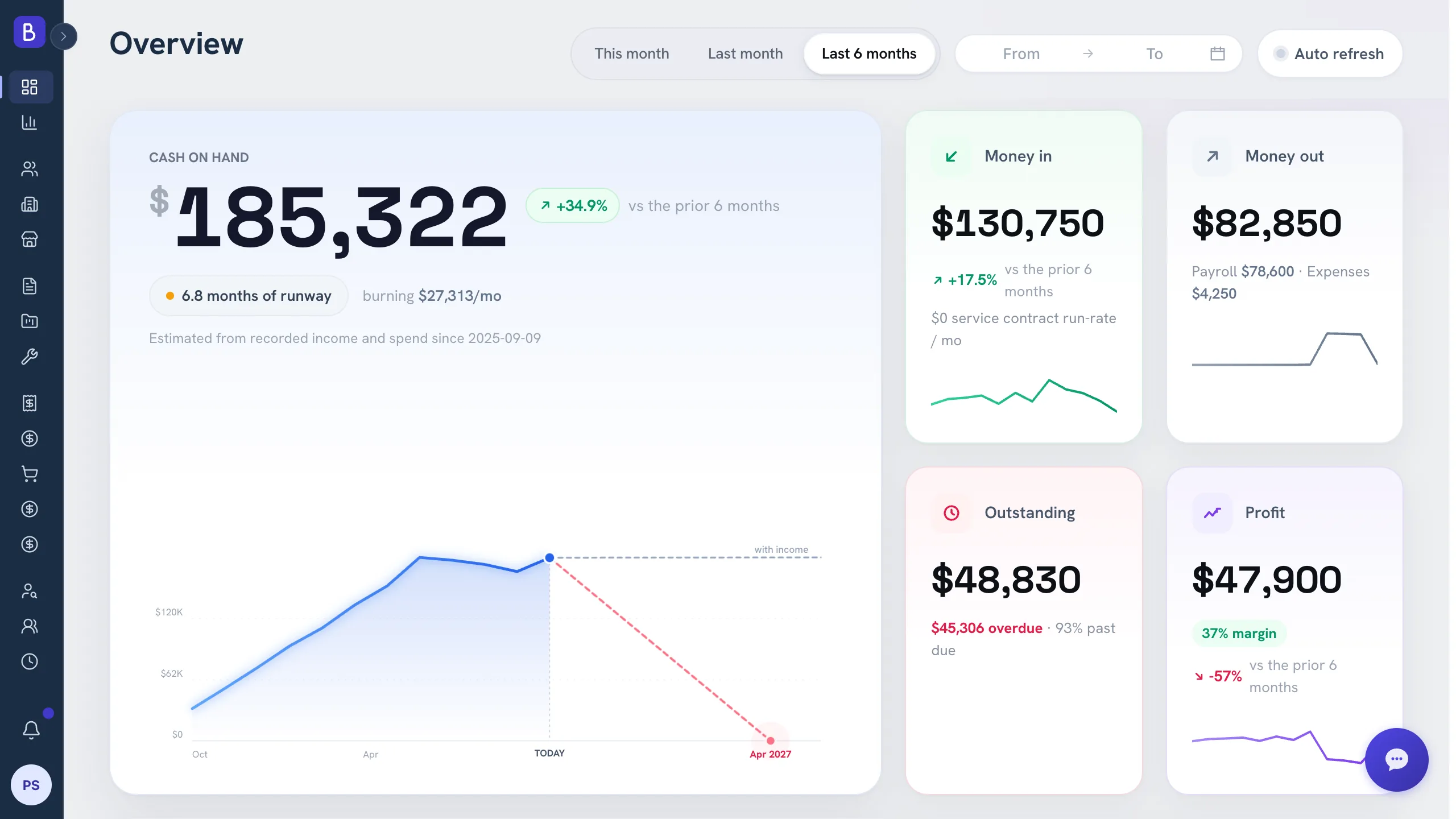
Income ceiling vs. income floor. As a freelancer, your income ceiling is your rate times your available hours. It's limited. But your income floor is your own salary, and you control it. As an agency, your ceiling is theoretically unlimited, but your floor can be negative. I had months where the business lost money. That never happened when I was solo.

Simplicity. I miss the simplicity. Client pays me, I do the work, I pay my taxes. Done. Now I have payroll, benefits administration, liability insurance, quarterly estimated taxes for the business, sales tax in three states, and a bookkeeper I pay $400 a month. The administrative load is real.

Creative control. When I was solo, every pixel was mine. Now, most pixels aren't mine. I've made peace with this, mostly, but there are days when I see a deliverable go out and think "I would have done that differently." The trick is knowing when "differently" means "better" (say something) versus when it just means "the way I personally prefer" (let it go).

Stress type. Freelancer stress is "will I find enough work?" Agency stress is "will I find enough work for everyone?" The second one is worse because it's not just your problem. Four families depend on you finding the answer.

So Is It Worth It?

People ask me this a lot. My answer is annoyingly nuanced: it depends on what you want.

If you want maximum income for minimum complexity, stay freelance. Seriously. Raise your rates, get better clients, and enjoy the lifestyle. There is nothing wrong with being a successful freelancer forever.

If you want to build something bigger than yourself, if you want to take on larger projects that require a team, if you want the challenge of growing a business, then the agency path is rewarding. But go in with open eyes. It will take longer than you think, cost more than you expect, and test your patience in ways you can't predict.

Two years in, my agency is profitable. Not wildly profitable, but healthily profitable. We do better work than I could do alone because the team brings perspectives and skills I don't have. We take on projects that would have been impossible for a solo freelancer. And yes, I'm finally making more money than I was solo, though not dramatically more.

Would I do it again? Yes. But I'd do it slower. I'd save more money before making the leap. I'd raise my prices first. And I'd be honest with myself about the fact that I wasn't starting a bigger version of my freelance career. I was starting an entirely different business that happened to do the same type of work.

Ready to streamline your business?

Replace 3-5 disconnected tools with one connected platform built for service teams.

See Pricing