Technology

Why Your CRM and Project Management Tool Should Be One Platform

Karim HaddadMarch 15, 20267 min read
Why Your CRM and Project Management Tool Should Be One Platform

How We Lost a $120K Client Because of a Spreadsheet

I ran operations for a 22-person IT services firm for four years. We had good people, good clients, and good work. We also had a client named Meridian Logistics who represented about $120,000 in annual revenue across three ongoing projects and a maintenance contract.

We lost them. Not to a competitor. Not because our work was bad. We lost them because nobody on my delivery team knew that our sales team had promised Meridian a dedicated account manager during the contract renewal three months earlier.

Here's what happened. Our sales director, Omar, used HubSpot to manage client relationships. He tracked every call, every email, every commitment he made during renewal conversations. Our project management team used Monday.com. They tracked tasks, timelines, and deliverables. These two systems did not talk to each other. At all.

When Omar renewed Meridian's contract, he promised them that going forward, they'd have a single point of contact for all three projects instead of dealing with three different project managers. He logged this in HubSpot as a note on the account. He mentioned it in passing at a team meeting. Nobody on the delivery side wrote it down.

Three months later, Meridian's COO called me directly. She was frustrated. She'd been bounced between three PMs for the past month trying to get a simple status update on all her projects. She said, "I was promised one person who'd own our relationship. Was that a lie?"

It wasn't a lie. It was a handoff failure. The promise lived in a CRM that the delivery team never looked at. By the time I understood what happened and tried to fix it, the damage was done. Meridian gave us 60 days' notice and moved to a competitor.

$120,000 a year. Gone. Because of a gap between two software tools.

The Data Silo Problem Is Worse Than You Think

When I tell people that story, the response is usually "well, that's a communication problem, not a tools problem." And they're partly right. Omar should have made sure the delivery team knew about the promise. But here's the thing: in a 22-person company juggling 40+ active projects and relationships, relying on people to manually transfer information between systems is a strategy guaranteed to fail.

It didn't fail once. It failed constantly. The Meridian situation was just the most expensive example.

Our sales team would log client preferences and sensitivities in HubSpot. "Meridian's CFO is very particular about invoice formatting. Always itemize by project." This information never reached the finance person who sent the invoices from QuickBooks, pulling project data from Monday.com. The CFO received generic invoices. He complained. Repeatedly. Each time, someone would fix that specific invoice, but the underlying information gap remained.

Our project managers would discover things about clients during delivery that were relevant to the sales relationship. "Meridian is expanding into cold chain logistics and will probably need new infrastructure." This information lived in Monday.com comments that Omar never saw. Meanwhile, our competitor was having that conversation with Meridian because their account manager and delivery team shared the same system.

This is what data silos actually cost you. Not in the abstract. In real money, real clients, and real opportunities.

The Handoff Problem: When Sales Wins but Delivery Loses

In every service company, there's a moment where a client transitions from "prospect being sold to" by the sales team to "active client being served" by the delivery team. This handoff is where things break.

In a CRM-only world, the sales team has rich context about the client. Their goals. Their concerns. Their budget sensitivity. The specific phrasing they used to describe what they wanted. The competitor they were also considering. What made them choose you.

In a PM-only world, the delivery team sees a project with a scope, a timeline, and deliverables. They don't see the conversations that led to those deliverables. They don't see the compromises the client agreed to. They don't see the things the client specifically said they didn't want.

When these worlds are separate, the handoff strips the context. The client goes from talking to someone who deeply understands their situation to talking to someone who has a document with bullet points. It feels abrupt. It feels impersonal. And it starts the client relationship on the delivery side with a trust deficit.

I've seen this play out dozens of times. A sales rep builds rapport over weeks of conversations. They close the deal. They send a "kickoff email" to the PM with the proposal attached and maybe a few notes. The PM reads it, but notes don't capture tone, nuance, or relationship dynamics. The client's first meeting with the PM feels like starting over. They're repeating information. They're explaining preferences again. The goodwill the sales rep built starts to erode.

The "Who Owns the Client" Problem

In companies with separate CRM and PM tools, there's a constant tension about who owns the client relationship. Sales thinks they do, because they won the deal and manage renewals. Delivery thinks they do, because they're the ones talking to the client every week.

The truth is that neither fully owns it, and the client suffers.

When a client has a billing question, who do they call? When they want to discuss expanding the engagement, who initiates that conversation? When they're unhappy about something, who finds out first?

In a company with separate systems, the answer depends on which system the information lives in. If the client complains to the PM, it might never reach sales. If the client mentions expansion interest to the sales rep, the PM might not know until a new project magically appears.

I had a situation where a client told our PM they were unhappy with the pace of a project. The PM logged it in Monday.com and adjusted the timeline. Meanwhile, Omar was in HubSpot scheduling a call with the same client to pitch an additional engagement. He had no idea they were frustrated. The pitch call was awkward. The client felt like we were tone-deaf, trying to sell them more work while they were unhappy with the current work. That's a trust-destroying moment, and it happened entirely because of system separation.

What a Unified View Actually Looks Like

When I talk about combining CRM and PM, I don't mean bolting them together with integrations. I've tried that. We set up a Zapier connection between HubSpot and Monday that was supposed to sync client notes and deal information. It worked about 70% of the time. The other 30%, data was delayed, incomplete, or formatted wrong. Integrations are duct tape on a structural problem.

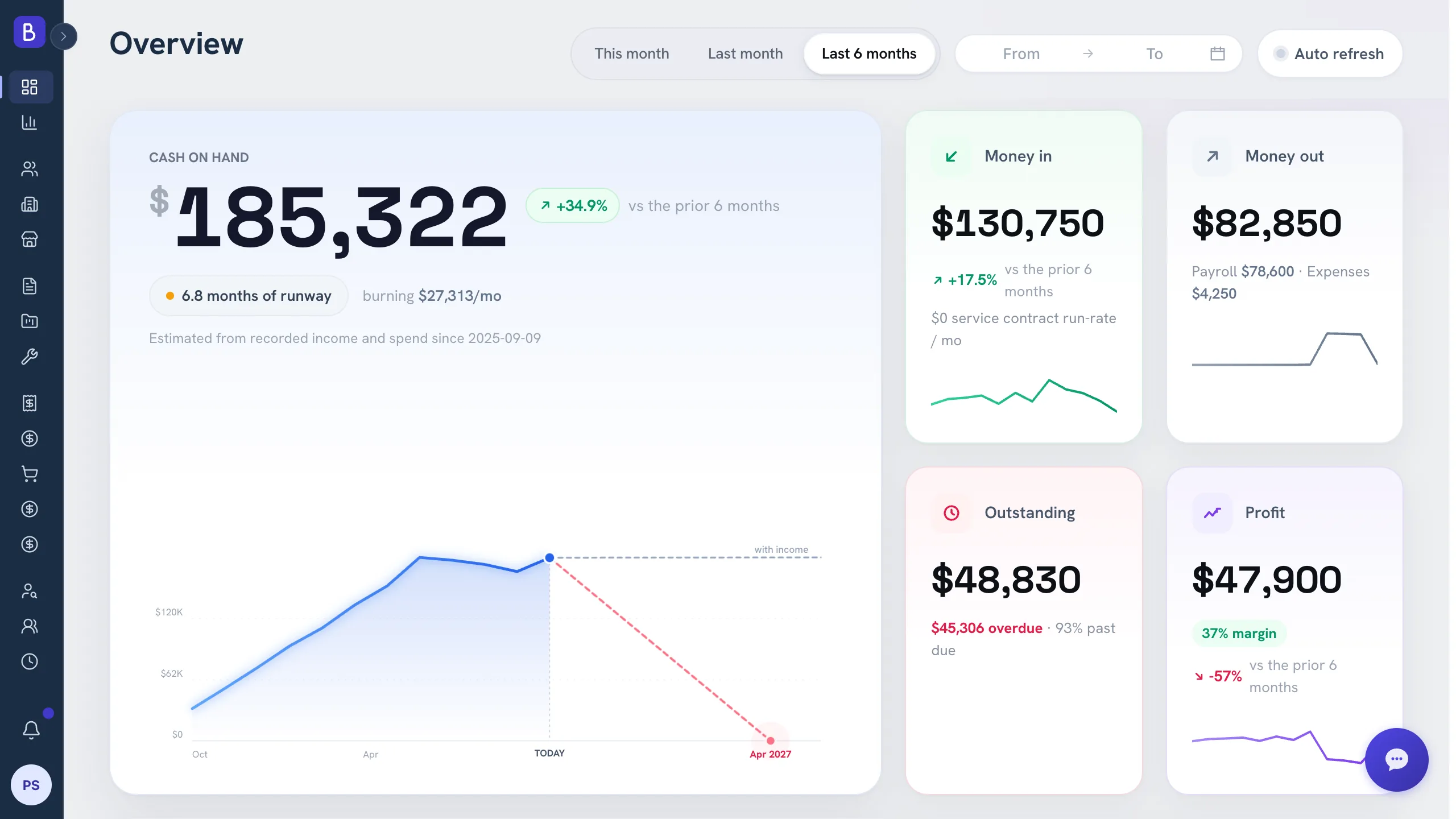
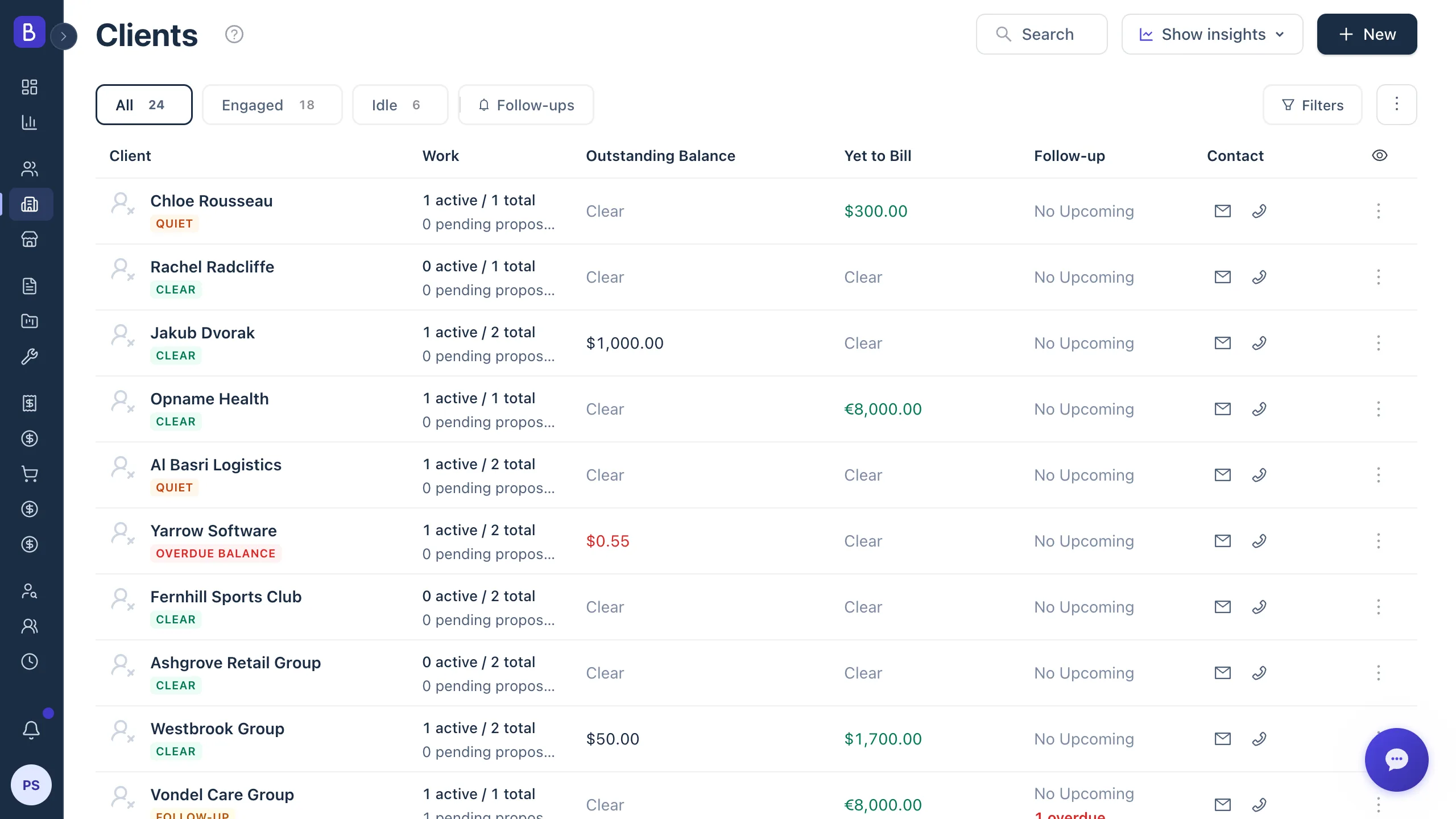
What I mean is a single platform where client data and project data live in the same database. Where clicking on a client shows you everything: their contact information, their communication history, their active projects, their past projects, their invoices, their payments, and any notes from anyone on your team.

In this model, when the PM discovers that the client is expanding into cold chain logistics, they note it in the same place the sales team looks. When the sales rep promises a dedicated account manager, the delivery team sees it because it's attached to the same client record they use every day.

The handoff problem largely disappears because there's no handoff. The data doesn't move between systems. Sales and delivery look at the same screen. The context accumulated during sales stays attached to the client through the entire lifecycle.

I'm not saying this magically solves all communication problems. People still need to talk to each other. But it eliminates the systemic gaps that cause information loss even when people are doing their jobs well.

The Financial Visibility Argument

There's another benefit to combined CRM and PM that doesn't get enough attention: financial visibility.

When your sales pipeline lives in a CRM and your project costs live in a PM tool, answering simple business questions becomes a research project.

"What's our average margin on projects for clients who came through referrals?" That requires pulling deal data from the CRM, matching it to project cost data in the PM tool, and doing the math in a spreadsheet. In a unified platform, it's a report filter.

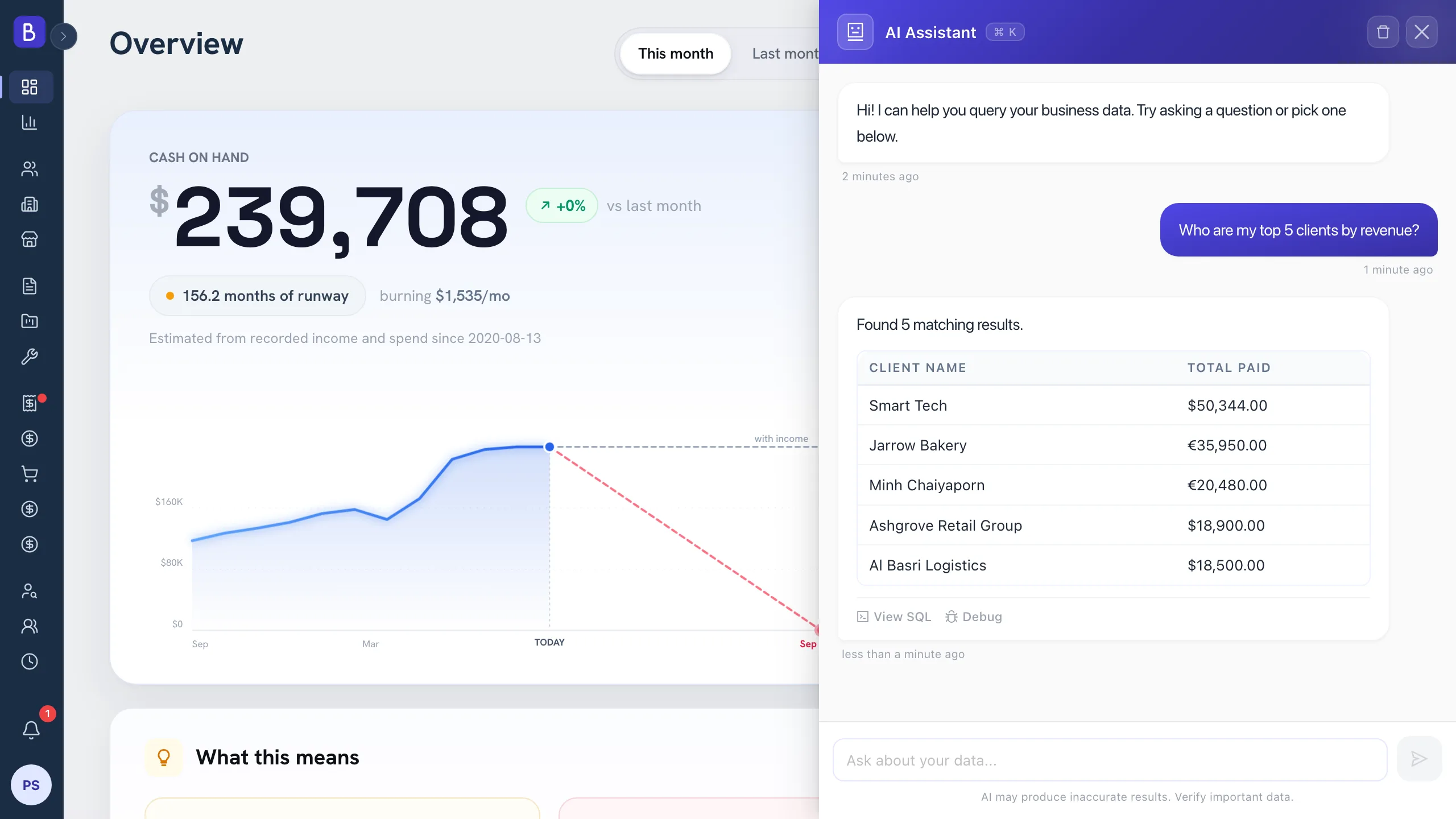
"Which clients have the highest lifetime value?" In separate systems, you need to sum invoices from your accounting tool, match them to clients in the CRM, and account for project costs from the PM tool. In a unified platform, it's already calculated.

"Are we making money on our maintenance contracts or losing money?" Separate systems make this hard to answer because the contract terms are in the CRM, the work performed is in the PM tool, and the payments are in the accounting system. A unified platform shows you the contract value, the time spent, and the revenue collected in one view.

I spent about four hours per month cobbling together financial reports from three different systems. The numbers were never perfectly consistent because each system had slightly different data. Finance decisions were made on approximations. That's not a great way to run a business.

When Separate Tools Actually Make Sense

I want to be honest about this because I don't think the "one platform" answer is universal.

Enterprise companies (100+ people) with dedicated sales and delivery departments often benefit from specialized tools in each area. HubSpot or Salesforce for a 15-person sales team is going to be more powerful than the CRM module of any combined platform. Jira for a 50-person development team is going to be more capable than a combined tool's project management. At that scale, the integration cost is worth paying for the specialized functionality.

Companies with extremely different sales and delivery workflows might find that no single platform handles both well. If your sales process is highly automated with complex pipeline stages and your delivery is pure creative work tracked on whiteboards, forcing both into one tool might mean neither works well.

Companies that already have deeply customized tools with years of data and established workflows should think carefully about migration cost. If your team has spent two years building a perfectly tuned Asana setup and the only gap is client context, adding a lightweight CRM integration might be better than ripping everything out and starting over.

But for most service companies between 5 and 50 people? Separate CRM and PM tools create more problems than they solve. The integration overhead, the context loss, the duplicate data entry, the conflicting information. It adds up to hours of wasted time every week and, occasionally, to losing a client worth $120,000 a year.

Making the Switch

If you're considering combining your CRM and PM, here's what I learned from eventually making that transition:

Map every piece of client data across all your current systems. You'll be shocked at how much is scattered. Contact info in the CRM. Project preferences in the PM tool. Billing details in the accounting system. Notes in email threads and Slack messages. You need to know what you're consolidating before you can consolidate it.

Get buy-in from both sales and delivery. If either team feels like the new system is built for the other team, adoption will fail. Involve people from both sides in the evaluation and setup process. Make sure the system works for both workflows, even if it means compromising on features each team would prefer.

Migrate the last 12 months of data, not everything. I've seen teams spend months migrating five years of history that nobody will ever look at. Start with active clients, active projects, and the past year of financial data. You can always go back for historical records if you need them.

Accept a transition period. You won't flip a switch and have everything working perfectly. Plan for two to three months of parallel operation where some people are still using the old tools while the new one gets established. Don't force a hard cutover. Let the new system prove its value and adoption will follow.

The day I could click on Meridian's name and see every proposal we'd sent them, every project we'd delivered, every invoice paid and pending, every note from sales and delivery, all in one view, was the day I understood what we'd been missing. I just wish I'd understood it before they left.

Ready to streamline your business?

Replace 3-5 disconnected tools with one connected platform built for service teams.

See Pricing