A recruitment pipeline should feed demand, not chase it
A recruitment pipeline is the tracked path a candidate takes from first contact to placement: sourced, screened, interviewed, and either hired or added to a talent pool for next time. For a staffing agency or a small firm that staffs its own projects, the pipeline earns its keep when it is connected to demand, so you are building candidate supply before a role opens, not scrambling after it does.
Use this if hiring only starts once a project is already under-staffed, or if strong candidates disappear into a folder after one conversation.
Why agency recruiting is different
Corporate hiring can take its time: post a role, wait for candidates, run three interview rounds, deliberate. Agency and staffing recruiting cannot. You win a project or a client requisition, and the team is expected soon after. The pipeline has to move fast, and the only way it moves fast under pressure is if the groundwork was already done. That means recruiting is not a reaction to an open role. It is an ongoing supply function feeding known and likely demand.
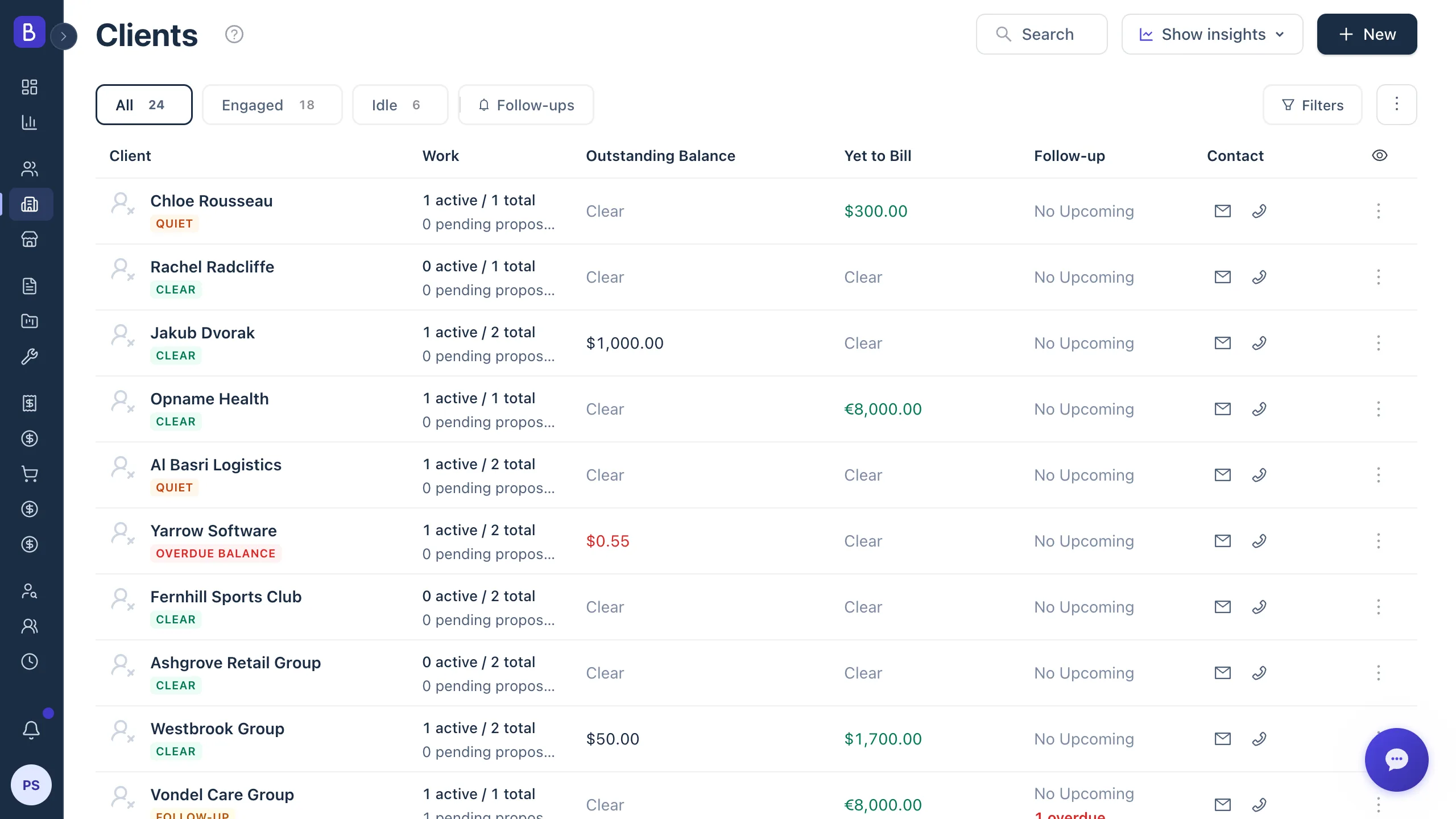
This is doubly true for a staffing agency, where candidates are the product. If you place people with clients and bill for those placements, the speed and quality of your pipeline is the business. See how Belvak works for staffing agencies, where candidates, clients, and invoicing sit in one place.
The pipeline stages
A practical pipeline can start with a small, honest set of stages:
- Sourced.
- Screened.
- Interviewed.
- Skills checked.
- Offer.
- Hired.
- Talent pool.
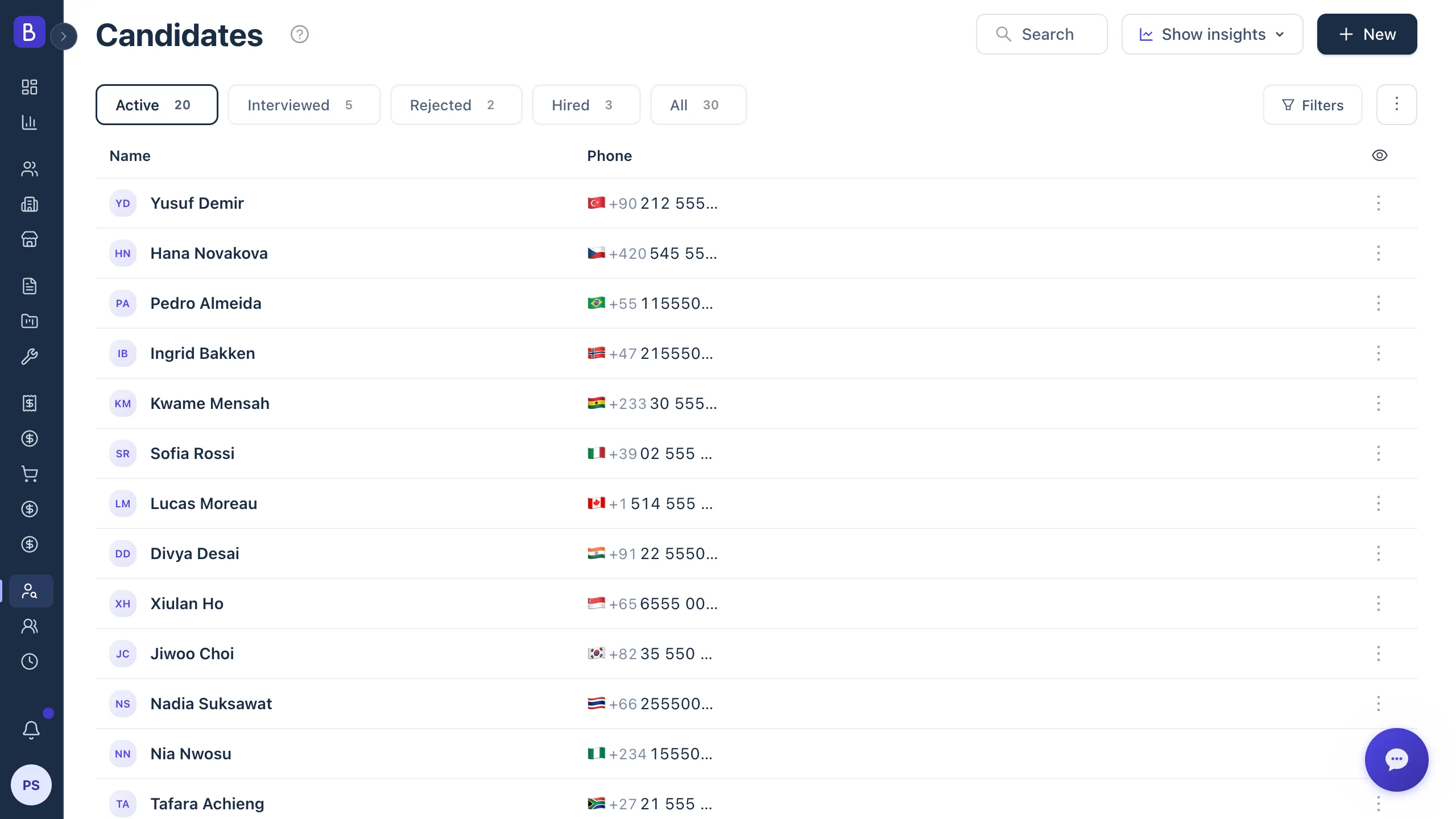
Each stage needs an owner, a next action, and an expected date. A candidate sitting in a stage with no next action is not in your pipeline. They are just a name. Keep the stage names consistent with how the work really flows, and resist adding stages that do not change what happens next. In Belvak, candidate records move through active, interviewed, hired, and rejected, which maps cleanly onto a lean pipeline without inventing extra states.
Build a skills matrix
Generic hiring criteria are useless for agency work. "A developer with five years of experience" does not tell you whether they fit the project starting in three weeks. Skills are the currency of agency recruiting, so track them in a structured way on every candidate:
- Primary role.
- Seniority.
- Tools and technical skills.
- Industry experience.
- Languages or location constraints.
- Availability date.
- Compensation expectation.
When candidates and projects are both tagged with the same skill vocabulary, matching a person to a need takes seconds instead of a scavenger hunt through old resumes. Recruitment that tags skills on each candidate, and that can auto-extract nine profile fields from an uploaded CV, turns intake from a data-entry chore into a quick review.
Turn hiring into a gap analysis against project demand
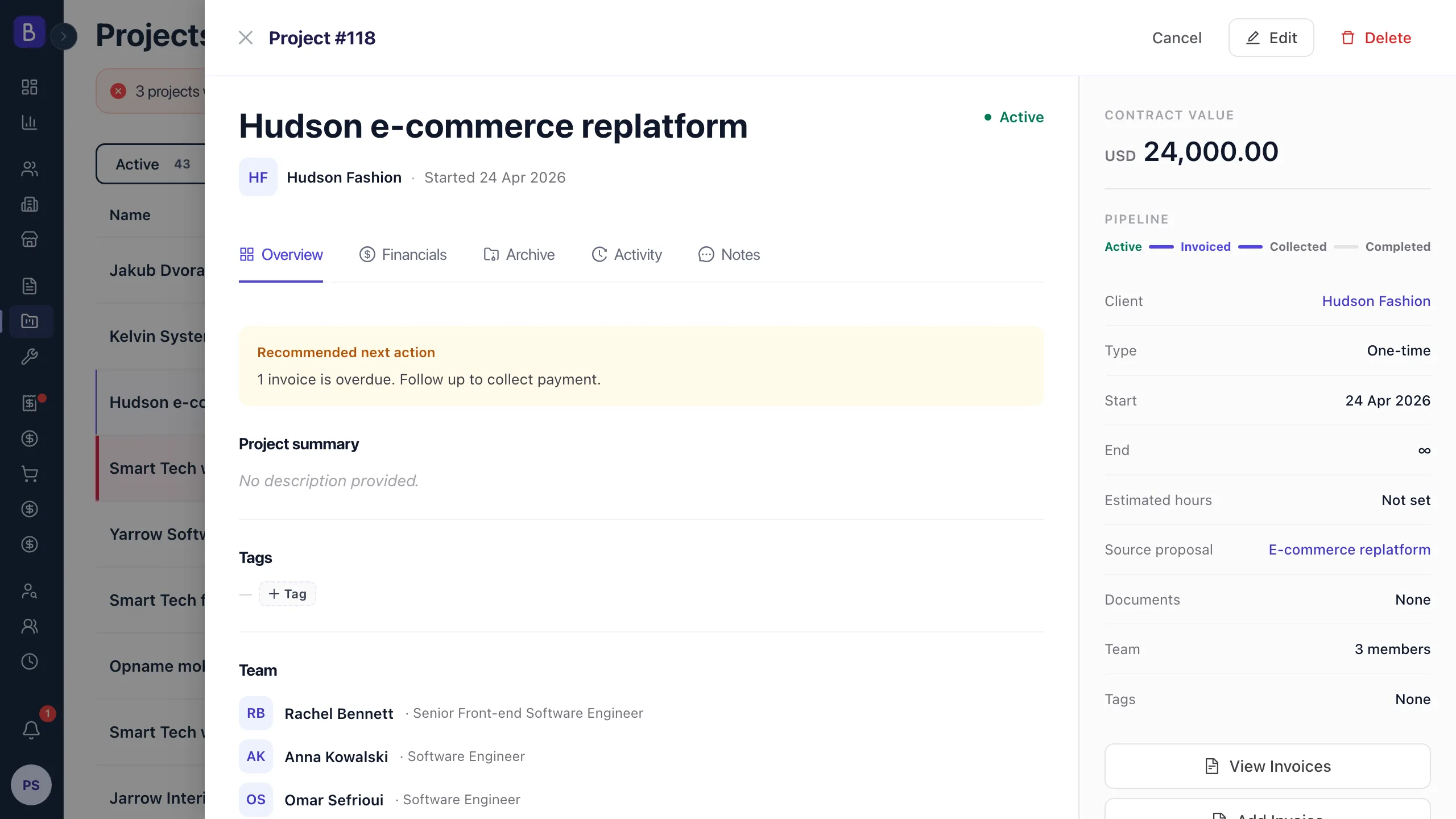
The real power of a pipeline connected to your work is that hiring becomes a gap analysis instead of a guess. Look at the proposals in progress and the projects on the books, list the skills they need, and compare that against the skills your current team and active candidates hold. If four upcoming engagements need one skill and you have one person who holds it, that tells you exactly who to hire next. If a designer is finishing a project in two weeks, you may not need to hire at all. You need to wait. Hiring blind, without that demand picture, is how firms over-hire in one area while scrambling in another.
The talent pool is your fastest source
The most wasted asset in most recruiting is the strong candidate who was not right this time. Not weak, just wrong timing, wrong specific role, or a rate mismatch for that particular opening. In a disconnected tool, they vanish into a rejected folder. In a maintained pipeline, they stay in a searchable talent pool, tagged with their skills and a note on why they were not placed. When demand shifts, they surface immediately. Talent-pool hires are faster because there is no sourcing, cheaper because there is no job-board spend, and often better fits, because you already know them. A pool is only valuable if it is searchable and kept current, not if it is a graveyard of old CVs.
What an applicant tracking system does
The tool that holds all of this is an applicant tracking system. An applicant tracking system organizes candidates through stages, stores CVs and notes, and makes the pipeline searchable so hiring is a process rather than a memory exercise. For a small agency, the important question is not whether it has every enterprise feature. It is whether it sits next to your project and client data, so recruiters can see demand and project managers can see supply. A standalone system that lives in its own universe recreates the exact information gap the pipeline is meant to close.
The placement-to-billing handoff for staffing firms
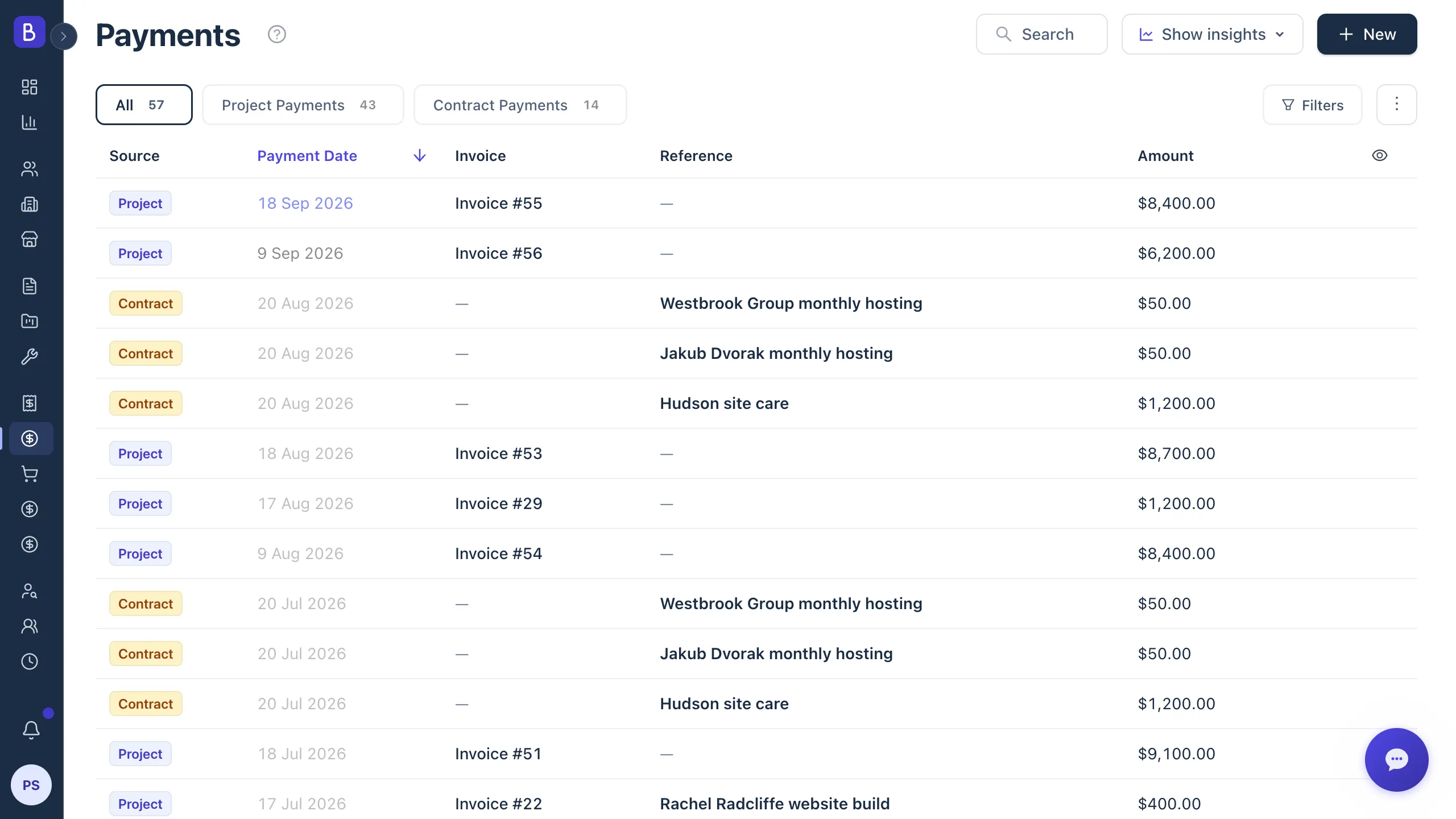
For a staffing agency, the pipeline does not end at hired. It ends at placed and billed. A hired candidate's profile should carry into the record you actually operate from, so their role, skills, and details are not re-entered, and the placement can flow into client billing without a second round of data entry. In Belvak, a hired candidate's profile can be copied into the employee record, which keeps the handoff clean. When placement and billing are connected, you can see which placements are live, which clients they belong to, and what has been invoiced, without stitching three systems together.
A few metrics worth tracking
Keep the measurement light but real:
- Time from a need being identified to a hire or placement.
- Number of active candidates per open role, aiming for a healthy cushion rather than one hopeful.
- Pass-through rate between stages, to find where candidates stall.
- Offer or placement acceptance rate.
- Time from hire to first project assignment.
If your recruiting is currently a folder of unsorted resumes, do not start with a metrics dashboard. Start by auditing the skills your next few months of work will demand, map your current team honestly against them, and put candidates into a simple tracked pipeline that lives next to your projects. Once someone is hired, a clean handoff into onboarding keeps the momentum, which the guide on onboarding new employees at a growing agency walks through.