New hires need a system, not a stack of links
Onboarding a new employee at a growing agency works when one person owns the plan, the hire has working access and equipment on day one, and the first month moves them from watching to real work with a scheduled check-in at 30 days. The chaos most owners describe comes from treating onboarding as something that happens on its own rather than a checklist someone actually runs.
Use this if you are hiring past the point where a new person can absorb everything by sitting next to the founder, and you want them contributing without decoding the business alone.
Who owns onboarding, and why "everyone" means no one
At five people, onboarding is automatic. The new hire sits near the founder, absorbs context by proximity, and knows the business within a week because there is not much to know. Past ten or fifteen people that breaks. Institutional knowledge is spread across too many heads, and "they will figure it out" stops working right when your existing workload is heaviest.
The fix is to name one onboarding owner per hire. This is not always the direct manager, who is often the busiest person in the room. The owner's job is narrow: confirm the plan is happening. They check that accounts exist, introductions are scheduled, client context gets explained, first-week tasks are assigned, and the manager gives feedback on time. Onboarding fails at growing agencies for one boring reason, which is that nobody was ever specifically given the job of making sure it happens.
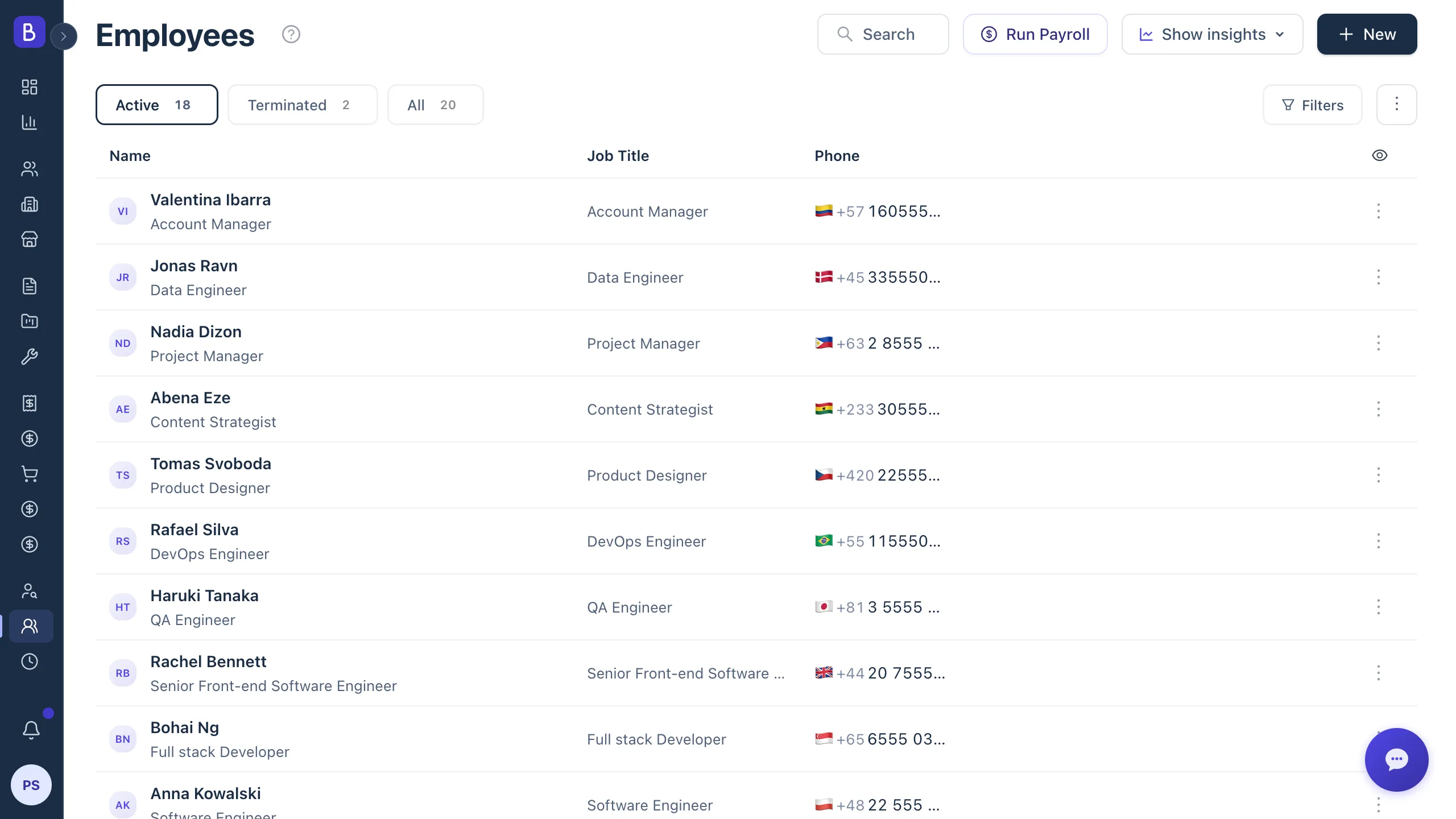
Onboarding also starts before day one. The hiring stage already gathered a resume, skills, and notes on the person. If that history carries into the employee record, the owner starts from what you know instead of a blank profile. In Belvak, a hired candidate's profile can be copied straight into the employee record, so the recruitment work is not retyped. If you run hiring as a pipeline, the recruitment pipeline for agencies guide covers the stages that feed onboarding.
What to set up before day one
Nothing kills momentum like a first day spent waiting for a laptop. Build a standing pre-start checklist so the owner is not improvising:
- Equipment ordered and tested, not borrowed with the last person's files still on it.
- Accounts and access created for every tool the role needs, at the right permission level.
- A workspace, physical or a set of shared folders, ready to use.
- A short list of the projects and clients the hire will touch first.
- A named buddy: a peer six months to a year in, not a manager, who fields the questions people feel silly asking.
- The first-week plan written down, with owners and dates.
Keep this list where you manage people, not scattered across notes. An employee management record that holds the profile, documents, skills, and pay setup gives the owner one place to confirm everything is ready.
The first day: comfort and access, not output
Do not expect real work on day one. The goals are simpler: the new hire has working access, has met every person on the team face to face, and knows who their buddy is. A short team lunch or a round of introductions does more for retention than any document. People do not leave jobs, they leave situations where they feel disconnected, and the first day sets that tone.
For remote or hybrid hires this matters more, not less. Replace hallway introductions with live video calls, a pairing session, and a standing buddy channel. Chat messages alone do not create belonging.
The first week: shadow, then do
A good first week proves the project is under control without producing finished work. Move the person from watching to doing as fast as you responsibly can:
- Days one and two: company overview, tool walkthroughs, and role expectations. Show how your team actually uses the project tool, not just its features. Where do we track hours? How is status updated? Where do notes about a client's preferences live?
- Days two and three: walk through three or four recent projects end to end, from the proposal to the finished work to the invoice. Someone who understands why a client wanted something builds better work than someone following a spec.
- Days four and five: a real but low-risk task, paired with a senior colleague. Something that matters but is not on a looming client deadline, so there is room to ask questions and make small mistakes.
Two traps sit on either side of this. Under-training throws someone in and hopes they swim; they pick up bad habits nobody corrects and feel disconnected. Over-training has them shadow for a month with no contribution, which signals you do not trust them and bores them out the door. Short shadowing, then supervised doing, then independent work with check-ins is the pattern that holds.
The first month and the 30-day check-in
Do not save all your feedback for a formal 30-day review, because by then habits have already formed. Check in at the end of week one with a real conversation: what is confusing, what do you need that you do not have, is anything blocking you. Repeat around day 15. Treat these as temperature checks, not performance reviews.
At 30 days, look at three things: is the person doing real work independently, do they understand how their role connects to clients and revenue, and is the documentation you handed them actually being used. This is also the point to sanity-check their utilization rate expectation. A new hire should not be fully billable in month one, and a realistic ramp protects both the work and the person. If time to first useful contribution is still weeks out at day 30, the onboarding plan needs work, not the hire.
Onboarding mistakes that quietly cost you the hire
A few patterns show up again and again at growing agencies:
- Skipping client introductions. If someone will work on a client's project, introduce them in a line of email or a brief appearance on the next call. It takes two minutes and makes the hire a real team member instead of a ghost.
- Writing one giant manual. A 40-page onboarding document goes unread. Short, specific pages delivered at the moment they are needed, one for environment setup, one for how projects are structured, beat a comprehensive guide nobody opens.
- Assuming your tools are intuitive. The tool is not the hard part; your team's specific workflow inside it is. Walk the new hire through it directly.
- Waiting too long for the first feedback. Silence in week one reads as neglect. A single honest check-in surfaces problems while they are still cheap to fix.
Onboarding is not glamorous work, but it is high leverage. Every person who joins, stays, and becomes productive is worth far more than the hour it takes to write a repeatable plan. Build the checklist once, give it an owner, and stop relying on luck.