Industry

Building Predictable Revenue as a Service Business

Nadia MansourMarch 24, 20267 min read
Building Predictable Revenue as a Service Business

We Had $340,000 in Revenue and Nearly Went Under

In 2023, our IT consulting firm brought in $340,000 in revenue. That sounds healthy for a seven-person shop. The problem is that $185,000 of it arrived between March and June, and October through January was basically a desert. We made $41,000 in those four months combined.

I remember sitting at my kitchen table in November, looking at the numbers, and realizing I had about six weeks of payroll left in the bank. We had no signed projects in the pipeline. Two proposals were "pending," which is a word that means absolutely nothing when you need to make payroll on the 15th.

We survived. A project came through in December that kept us going. But I never wanted to feel that way again. That experience turned me into someone who is borderline obsessive about predictable revenue, and I think every service company owner should be.

The Feast-or-Famine Trap

Here's why service companies get stuck in this cycle, and it's more structural than most people realize.

When you're busy, you're heads-down delivering. Every person on the team is working on client projects. Nobody is doing business development because there's no time. You're fully utilized, which feels great. Revenue is flowing in. You think, "We've figured this out."

Then the projects end. Sometimes they all end around the same time, because you started them around the same time. Now your team is sitting idle, and you've done zero sales activity for the past two or three months because you were too busy delivering. So you start scrambling. Cold outreach, networking events, calling old contacts. But sales cycles take time. Even if you land a new client tomorrow, the project might not start for three weeks, and the first invoice might not go out for six weeks after that.

This cycle repeats endlessly unless you deliberately break it. I've talked to dozens of service company owners who describe the exact same pattern. Busy, then dead, then busy, then dead. Some have been running their businesses this way for ten years. It works, technically. But it's exhausting, and it makes long-term planning nearly impossible.

The Math Behind Revenue Stability

Before I changed anything about our business model, I did the math. I wanted to understand exactly how much recurring revenue we needed to break the cycle.

Our fixed monthly costs were about $28,000. That's salaries (biggest chunk), office space, software subscriptions, insurance, and the various small expenses that add up. To survive a zero-project month, I needed $28,000 coming in regardless of whether we signed new work.

But I didn't just want to survive. I wanted a floor that was high enough that even a bad month felt manageable. My target was to cover 60% of our fixed costs with recurring revenue. That meant $16,800 per month in predictable income.

At the time, our recurring revenue was $2,400 per month. One small hosting and support contract. The gap was enormous. But having a specific number changed how I thought about every business decision. Every new proposal, every client conversation, every pricing discussion was filtered through one question: does this move us closer to $16,800 per month in recurring revenue?

The Three Types of Recurring Revenue for Service Companies

Not all recurring revenue is created equal. After experimenting for about eighteen months, I've found three models that work for service companies. Most firms should use at least two of them.

Maintenance and Support Contracts

This is the most natural entry point. You build something for a client, then you offer to maintain it. For us, that meant offering ongoing IT support contracts after completing an infrastructure project. The client already trusts us. They already know our work. The conversation is easy.

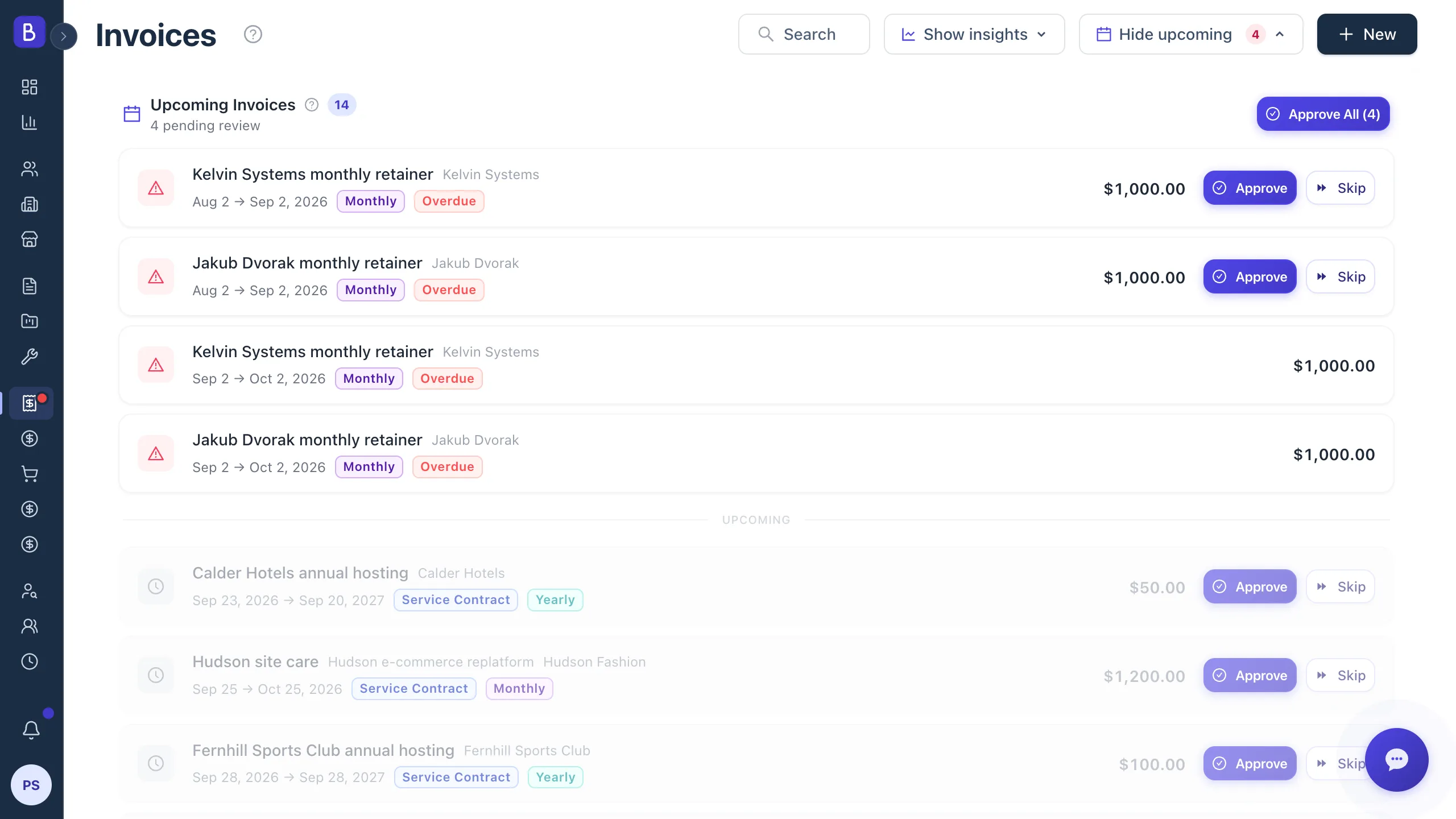
We started offering three tiers: basic (monitoring and critical issue response, $800/month), standard (monitoring plus 10 hours of support, $1,500/month), and premium (monitoring plus 20 hours plus quarterly reviews, $2,800/month). Most clients chose standard.

The key insight was packaging. When we offered "ongoing support" without a structure, clients said "we'll call you if we need something." When we offered a named package with a defined scope and monthly price, they signed up. Same service, different framing, completely different uptake rate.

Within eight months, we had nine maintenance contracts generating about $12,600 per month. That alone covered 45% of our fixed costs.

Retainer Agreements

Retainers are different from maintenance. Maintenance is about keeping something running. Retainers are about reserving capacity for ongoing work.

We offer retainer agreements to clients who need regular but not full-time help. A mid-size company that needs 15 hours of network engineering per month, for example. They get a guaranteed block of our time at a slight discount compared to our hourly rate, and we get predictable income.

The trick with retainers is setting clear use-it-or-lose-it terms. We bill monthly regardless of whether they use all their hours. Unused hours don't roll over, though I'll make exceptions for a month here or there if the client has a good reason. Without this policy, clients will bank hours and then dump a massive workload on you in month four, which defeats the whole purpose.

We currently have four retainer clients generating about $7,200 per month.

Recurring Project Structures

This one is less obvious but has been valuable. Some projects naturally repeat. Annual website audits. Quarterly security assessments. Bi-annual infrastructure reviews. Instead of waiting for the client to remember to call us each time, we propose these as annual contracts with scheduled deliverables.

We have two clients on annual security assessment contracts. They pay monthly, and we deliver a comprehensive assessment each quarter. It's about $3,400 per month combined. And because the work is scheduled in advance, we can plan our team's capacity around it.

How a Company I Know Nearly Went Under, and What They Changed

I want to tell you about a digital agency I worked with early in my career. They were a twelve-person web development shop, good people, talented team. They had one client that represented 40% of their revenue. A large retailer that kept them busy with continuous development work.

In 2021, that client got acquired. The new parent company had their own development team. The contract was terminated with 30 days' notice.

Overnight, 40% of the agency's revenue disappeared. They had to let four people go within two months. Two more left voluntarily because the instability was terrifying. By the end of the year, they were down to six people and running on fumes.

The founder rebuilt. But she did it differently the second time. The rules she set for herself were:

  • No single client would ever represent more than 20% of revenue
  • At least 50% of revenue would come from contracts longer than three months
  • Every project-based client would be offered a maintenance contract when the project wrapped up

It took her two years, but she got to a place where recurring revenue covered about 55% of fixed costs, and her largest client was 14% of total revenue. When another client left in 2024, it stung, but it didn't threaten the business.

The lesson is boring and unsexy: diversification and recurring revenue are insurance policies. You pay for them with effort and sometimes lower margins, but they keep you alive when things go wrong. And things always go wrong eventually.

The Revenue Mix I Recommend

After going through this myself and watching other service companies struggle with the same problems, here's the revenue mix I think most firms should aim for:

  • 40-50% project-based revenue. This is your growth engine. New clients, new projects, higher margins. But it's unpredictable, so it shouldn't be the majority of your income.
  • 30-40% recurring revenue. Maintenance contracts, retainers, recurring project structures. Lower margin than project work, typically, but predictable and compounding. Every new recurring contract you sign increases your floor permanently.
  • 10-20% expansion revenue. Upselling existing clients. Additional services for people who already know and trust you. This is the easiest revenue to win because there's no sales cycle.

Where you are right now probably doesn't match these percentages. That's fine. The goal is to move toward them gradually, not to overhaul your entire business model overnight.

Practical Steps to Start

If your recurring revenue is close to zero, here's what I'd do first.

Start with your last five completed projects. Call each client and offer a maintenance or support package. You've already done the work. You know their systems. The conversation is natural. Even if only one or two say yes, that's a start.

Price your recurring services based on value, not hours. A client doesn't care that their monthly support package takes you 8 hours. They care that their systems stay running, that someone picks up the phone when things break, and that they don't have to find a new vendor every time they need help. Price accordingly.

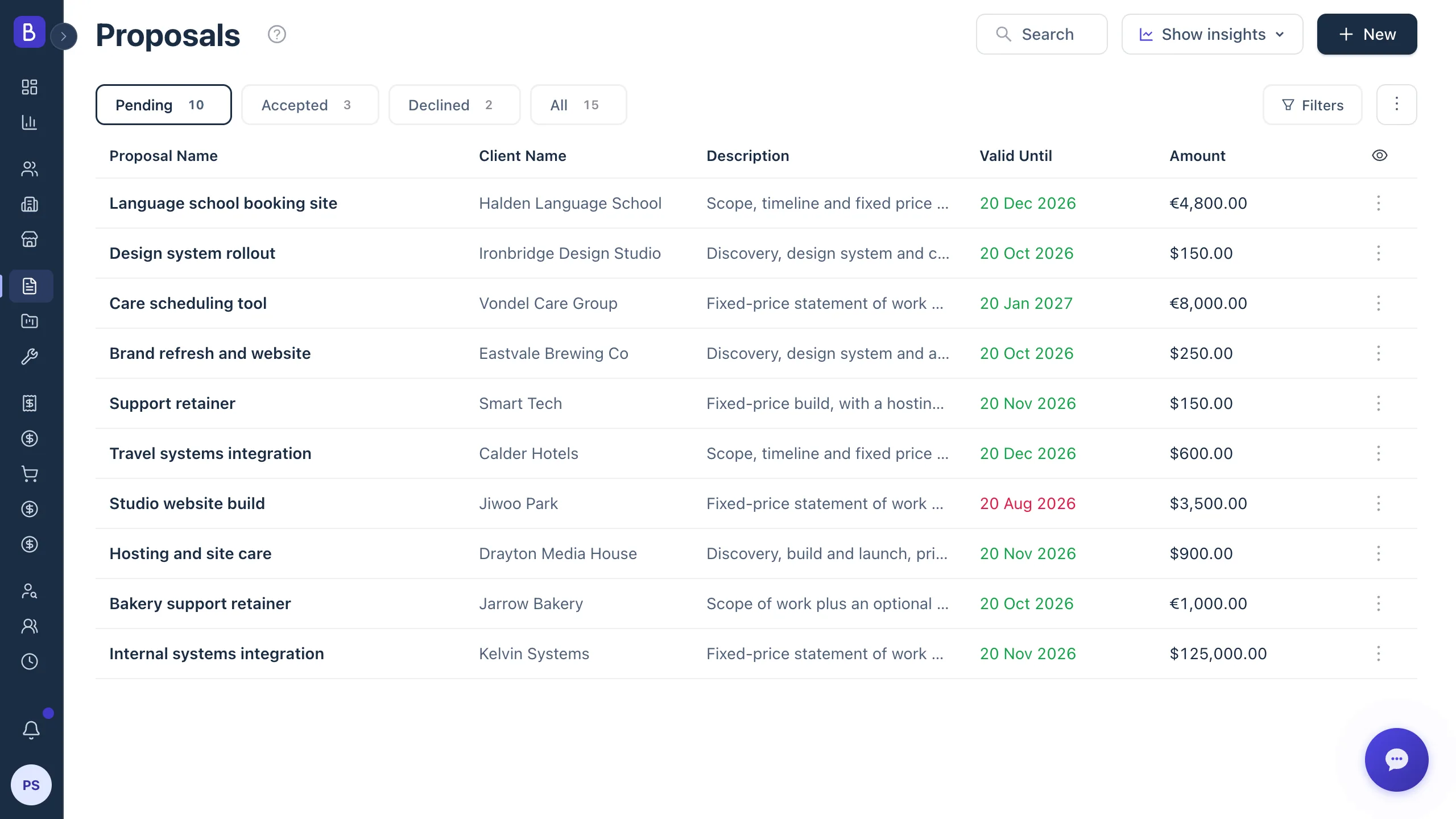
Build the renewal into your project proposals. Every proposal we send now includes a section about ongoing support after the project wraps. We don't push it. We just make it visible. "After delivery, many of our clients transition to a maintenance agreement to protect their investment. Here are the options." About 35% of new project clients convert to a maintenance contract. Before we included it in the proposal, the conversion rate was maybe 5%.

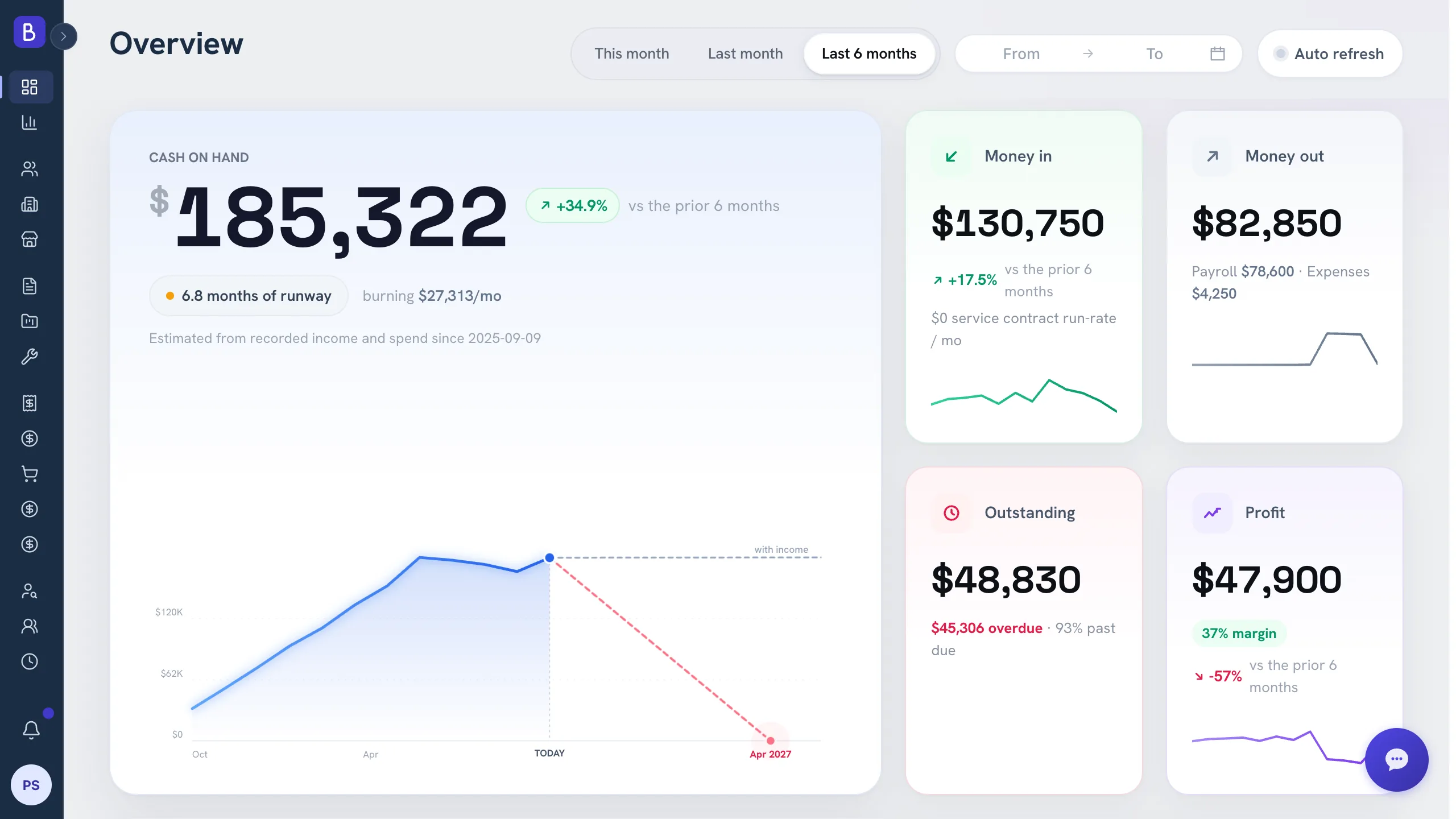
Track your recurring revenue as its own metric. Not buried in total revenue. On its own chart. Watched every month. This number should go up over time, ideally every quarter. If it's flat, you're losing contracts as fast as you're signing them, which means you have a delivery or relationship problem to investigate.

The Patience Problem

I'll be honest about one thing. Building recurring revenue is slow. It took us eighteen months to go from $2,400 to $23,200 per month in recurring income. There were months where nothing changed. A contract would end, and we'd sign a new one, and the number stayed flat. It felt like pushing a boulder uphill.

But it compounds. Every contract you add raises the floor. And unlike project revenue, which resets to zero when the project ends, recurring revenue carries forward. Month after month. The boulder gets easier to push because it's already rolling.

Last November, when other service companies were panicking about the holiday slowdown, we were relaxed. Not because we had a massive pipeline of new projects. We didn't. But $23,200 was coming in regardless, covering 83% of our fixed costs. We could afford to be patient about the next project-based deal instead of taking whatever walked through the door.

That patience is worth more than any single contract. When you're not desperate, you make better decisions about which clients to take, which projects to pursue, and what to charge. You negotiate from strength instead of fear. And ironically, that confidence tends to win you better clients, which creates more revenue, which makes you even less desperate.

The feast-or-famine cycle isn't inevitable. It's just the default outcome when you don't build anything underneath the feast. Build the floor first. Everything gets easier after that.

Ready to streamline your business?

Replace 3-5 disconnected tools with one connected platform built for service teams.

See Pricing